TUDCA Benefits: Liver Support, Uses, Dosage, Best Time & Side Effects
TUDCA has become an increasingly discussed ingredient among people searching for liver support, bile acids and digestive wellness.
Its full name is tauroursodeoxycholic acid, which explains why most people simply call it TUDCA.
But online discussions around TUDCA often move much faster than the science.
Is TUDCA actually good for the liver? What does it have to do with bile? How much TUDCA should you take? When is the best time to take it? And are there any side effects?
Here is a practical, evidence-focused guide.
What Is TUDCA?
TUDCA stands for tauroursodeoxycholic acid.
It is a hydrophilic bile acid related to ursodeoxycholic acid (UDCA).
Bile acids are naturally involved in digestion and particularly in the handling and absorption of dietary fats.
TUDCA has attracted scientific interest well beyond ordinary supplement marketing because bile acids also participate in cellular signalling and other biological processes.
However, the existence of scientific research does not mean every proposed TUDCA benefit has been established in healthy supplement users.
That distinction is important.
What Does Bile Do?
Your liver produces bile, which is stored and concentrated in the gallbladder before being released into the small intestine.
Bile plays an important role in:
- Digestion of dietary fats
- Absorption of fat-soluble nutrients
- Elimination of certain waste products
- Normal digestive physiology
TUDCA’s relationship with the bile-acid system is one reason it has become associated with liver and digestive wellness.
Potential TUDCA Benefits
1. TUDCA and Liver Research
TUDCA is widely searched as a liver support supplement.
Research into TUDCA and related bile acids has examined several liver-related mechanisms and clinical contexts.
But this requires careful interpretation.
Evidence from people with diagnosed liver or biliary conditions cannot automatically be converted into a claim that a dietary supplement will “detox” or repair the liver of a healthy person.
The liver already has sophisticated metabolic and elimination systems.
A more accurate description is that TUDCA is a bile-acid derivative being studied for several hepatobiliary and cellular processes.
2. TUDCA and Bile
TUDCA is closely connected to bile-acid biology.
This is one of the strongest reasons that TUDCA appears in formulations positioned around liver and digestive wellness.
Bile acids participate in fat digestion and nutrient absorption, but they also act as signalling molecules.
This makes TUDCA scientifically interesting.
It does not, however, mean that everyone with digestive symptoms needs a bile-acid supplement.
Persistent digestive symptoms should be properly evaluated.
3. TUDCA and Digestive Wellness
Because bile plays an important role in fat digestion, TUDCA is frequently marketed for digestive support.
However, symptoms such as:
- Abdominal discomfort
- Indigestion
- Diarrhoea
- Constipation
- Persistent bloating
can have many different causes.
A supplement should not be used to self-diagnose a gallbladder, liver or gastrointestinal disorder.
4. TUDCA and Cellular Research
TUDCA has attracted research interest for cellular mechanisms including responses to cellular stress.
This has led to experimental research across several areas.
But this is exactly where supplement marketing can become misleading.
A finding in a laboratory model does not prove the same clinical outcome in humans taking a supplement.
Mechanistic evidence should therefore be treated as a reason for further research—not as proof of a cure.
5. TUDCA and Metabolic Research
Bile acids are increasingly understood as biologically active signalling molecules.
Researchers have therefore investigated TUDCA in metabolic contexts as well.
Again, the evidence depends heavily on:
Population → Dose → Duration → Clinical condition → Outcome
It should not be assumed that TUDCA is a treatment for metabolic disease.
6. TUDCA and Antioxidant/Cellular Protection Research
Some experimental research has examined TUDCA in relation to cellular stress and protective pathways.
This is scientifically interesting but should not be translated into vague promises such as:
“Protects every organ”
or
“Repairs all damaged cells.”
Those claims go far beyond established human evidence.
Is TUDCA Good for the Liver?
This is probably the most important question people ask.
TUDCA has genuine scientific relevance to liver and bile-acid research.
However, “good for the liver” is much broader than one clinical outcome.
Liver health is influenced by factors including:
- Alcohol intake
- Body weight
- Metabolic health
- Medication
- Viral infections
- Diet
- Existing medical conditions
TUDCA should therefore not be presented as something that cancels out excessive alcohol consumption, poor diet or liver-damaging behaviours.
And it should never replace investigation of abnormal liver enzymes or symptoms of liver disease.
Does TUDCA Detox the Liver?
“Liver detox” is one of the most common supplement marketing phrases.
But it can be misleading.
Your liver is itself one of the body’s major metabolic and detoxification organs.
A supplement does not simply “flush toxins” out of the liver.
A better question is:
Does the ingredient have evidence relating to normal liver, bile or cellular processes?
For TUDCA, there is meaningful scientific interest in bile-acid and liver-related biology.
That is different from claiming that taking a capsule performs a general “detox.”
TUDCA Dosage: How Much Is Used?
There is no single universal TUDCA supplement dose established for every person and every purpose.
Commercial supplements also vary considerably.
For example, NIH’s Dietary Supplement Label Database contains marketed TUDCA products providing 250 mg per capsule, while other products provide around 500 mg per serving. These are examples of commercial labels—not universal medical dosing recommendations. DSLD
Research doses can differ substantially depending on the clinical setting.
Therefore:
Do not copy the dose from an unrelated clinical study or another brand’s label.
Follow the serving directions of your specific product and seek professional guidance where appropriate.
Best Time to Take TUDCA
People commonly search:
“Should I take TUDCA morning or night?”
“Should TUDCA be taken with food?”
“Should TUDCA be taken on an empty stomach?”
There is no single scientifically established clock time that applies to every TUDCA formulation and user.
Commercial product directions also differ: examples in the NIH label database include products directed with food, on an empty stomach, or simply with water. DSLD
This is why the safest general advice is:
Follow the directions on the exact product you are using.
Don’t assume another brand’s directions apply to yours.
How Long Does TUDCA Take to Work?
There is no universal answer.
The answer depends on:
- Why TUDCA is being used
- Dose
- Formulation
- Individual physiology
- Health status
- Outcome being measured
Be cautious with claims such as:
“TUDCA detoxes your liver in 7 days.”
There is no universal clinical timeline supporting that kind of promise.
TUDCA Side Effects
TUDCA is not automatically side-effect free because it is sold as a supplement.
Gastrointestinal effects are among the issues reported in human TUDCA research.
For example, a recent placebo-controlled study in a clinical population reported gastrointestinal adverse events including nausea/vomiting, diarrhoea, indigestion/reflux and abdominal discomfort; diarrhoea was the most common TUDCA-side event in that study. PubMed Central (PMC)
This does not tell us the exact risk for every healthy supplement user, but it reinforces an important point:
More is not automatically better.
Who Should Speak to a Healthcare Professional Before Taking TUDCA?
Professional advice is especially sensible if you:
- Have diagnosed liver disease
- Have gallbladder or bile-duct problems
- Have unexplained abnormal liver tests
- Take prescription medication
- Are pregnant or breastfeeding
- Have persistent digestive symptoms
- Are combining multiple liver-focused supplements
Several marketed TUDCA labels also advise consultation for pregnancy, breastfeeding, medication use or existing medical conditions. DSLD
TUDCA vs Milk Thistle
TUDCA and Milk Thistle are frequently combined, but they are not the same thing.
TUDCA
TUDCA is a bile-acid derivative.
Research interest includes bile-acid biology, hepatobiliary processes and cellular mechanisms.
Milk Thistle
Milk Thistle (Silybum marianum) is a botanical containing a group of compounds commonly referred to as silymarin.
It has a long history of use in liver-oriented supplements.
TUDCA ≠ Milk Thistle.
They have different compositions and research profiles.
TUDCA vs NAC
NAC stands for N-acetyl-L-cysteine.
It is a derivative of the amino acid cysteine and is relevant to glutathione biology.
TUDCA, by contrast, is related to bile-acid biology.
Therefore:
TUDCA → bile-acid-related ingredient
NAC → cysteine/glutathione-related ingredient
This is one reason the two may appear together in multi-ingredient liver-support formulations.
But evidence for each individual ingredient should not automatically be treated as proof that every combination product produces the same clinical outcome.
TUDCA vs Milk Thistle vs NAC
Rather than asking which one is universally “best,” understand their differences.
TUDCA: bile-acid derivative.
Milk Thistle: botanical/silymarin source.
NAC: cysteine derivative and glutathione precursor.
The appropriate choice depends on the intended nutritional purpose, formulation and individual circumstances.
What About Curcumin?
Curcumin is a major bioactive component associated with turmeric.
It has been extensively studied, but evidence differs considerably by health outcome and formulation.
NCCIH notes that research on turmeric/curcumin remains insufficient for definitive conclusions across many promoted uses. It also warns that some highly bioavailable curcumin formulations have been associated with liver injury. NCCIH
This is an important reminder that:
“Natural” does not mean “risk-free.”
How to Choose a TUDCA Supplement
Don’t choose a TUDCA supplement simply because the front label has the largest milligram number.
Check these factors.
1. Check the Actual TUDCA Amount
Determine the amount per capsule and per serving.
These are not always the same.
2. Check the Complete Formula
Is it pure TUDCA or a multi-ingredient formulation?
If it includes other ingredients, understand why they are there.
3. Check the Serving Directions
Don’t assume all TUDCA products are taken the same way.
4. Look for Transparent Labelling
You should be able to understand what the product contains without decoding vague proprietary marketing.
5. Consider Quality Controls
Manufacturing quality and ingredient identity matter.
6. Avoid Miracle Claims
Be cautious with claims such as:
“Repairs your liver instantly”
“Reverses fatty liver”
“Cures liver disease”
“Detoxes alcohol overnight”
“Protects the liver from any damage”
These statements go beyond what a dietary supplement should promise.
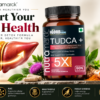
NutraMarck TUDCA+ Liver Support
NutraMarck TUDCA+ is a multi-ingredient formula designed around TUDCA and complementary ingredients.
The current formulation includes:
- TUDCA
- Milk Thistle
- N-Acetyl L-Cysteine (NAC)
- Curcumin
- Panax Ginseng
It is designed for adults looking for a convenient liver, antioxidant and digestive-wellness formulation. nutramarck
Explore NutraMarck TUDCA+ Liver Support →
NutraMarck TUDCA+ Liver Support
Remember that research on individual ingredients does not automatically prove an identical clinical effect for the complete combination.
Frequently Asked Questions About TUDCA
What is TUDCA?
TUDCA stands for tauroursodeoxycholic acid. It is a hydrophilic bile acid that has attracted scientific interest in relation to bile-acid, liver and cellular biology.
What are TUDCA benefits?
TUDCA has been researched across liver, bile-acid, metabolic and cellular contexts. The strength of evidence varies considerably by condition and outcome, so broad treatment claims should be avoided.
Is TUDCA good for liver support?
TUDCA has genuine scientific relevance to hepatobiliary research, but this should not be interpreted as proof that a supplement treats or prevents liver disease.
Does TUDCA detox your liver?
“Detox” is an oversimplification. The liver naturally performs complex metabolic and elimination functions. TUDCA is better understood in relation to bile-acid biology rather than as a generic toxin-flushing product.
What is the best TUDCA dosage?
There is no universal supplement dosage for every person or purpose. Follow the directions of your specific formulation and seek professional advice where appropriate.
What is the best time to take TUDCA?
There is no universally established best clock time. Product directions vary, so follow the instructions for the exact supplement you use.
Should TUDCA be taken with food?
Different commercial formulations provide different instructions. Follow your product’s label rather than assuming one rule applies to all TUDCA supplements.
What are TUDCA side effects?
Gastrointestinal effects such as diarrhoea, nausea, indigestion or abdominal discomfort can occur. Individual tolerance and clinical context vary. PubMed Central (PMC)
Is TUDCA the same as Milk Thistle?
No. TUDCA is a bile-acid derivative, while Milk Thistle is a botanical associated with silymarin compounds.
Is TUDCA the same as NAC?
No. NAC is a cysteine derivative involved in glutathione biology, while TUDCA is related to bile-acid biology.
Can TUDCA and NAC be in the same formula?
Yes, combination supplements exist. NutraMarck’s current TUDCA+ formula contains TUDCA and NAC along with Milk Thistle, Curcumin and Panax Ginseng. nutramarck
Can I take TUDCA every day?
Some commercial products are labelled for daily use, but that does not establish that every individual should use TUDCA indefinitely. Follow your specific label and obtain professional advice if you have medical conditions or take medication. DSLD
Final Thoughts
TUDCA is more scientifically interesting than the phrase “liver detox supplement” suggests.
It is a bile-acid derivative with genuine research interest across hepatobiliary, metabolic and cellular biology.
But that also means it deserves more precision—not bigger promises.
When considering TUDCA:
Understand What It Is → Check the Formula → Follow the Serving → Consider Safety → Avoid Miracle Claims
For a multi-ingredient formula combining TUDCA with Milk Thistle, NAC, Curcumin and Panax Ginseng:
Explore NutraMarck TUDCA+ Liver Support
References
- U.S. National Institutes of Health — Dietary Supplement Label Database: TUDCA supplement formulations and labelled serving directions. DSLD
- National Center for Complementary and Integrative Health — Turmeric: Usefulness and Safety. NCCIH
- Human clinical research examining TUDCA tolerability and bile-acid-related outcomes. PubMed Central (PMC)
Medical Disclaimer
This article is for general educational purposes only and is not medical advice. It is not intended to diagnose, treat, cure or prevent disease. People with liver, gallbladder or bile-duct conditions, those taking medication, and people who are pregnant or breastfeeding should consult an appropriate healthcare professional before using dietary supplements.




Add comment