Resveratrol Benefits: Anti-Ageing, Skin, Heart, Dosage & Side Effects
Resveratrol has become one of the most talked-about compounds in the world of antioxidants, skin wellness and healthy ageing.
It naturally occurs in foods such as grapes, berries and peanuts and has been investigated for potential effects involving oxidative stress, cardiovascular health, metabolism and cellular ageing.
This has also created plenty of exaggerated claims.
Can resveratrol really slow ageing?
Is it good for skin?
Does it support heart health?
What is trans-resveratrol?
How much resveratrol should you take?
And what should you check before buying a resveratrol supplement?
This complete guide separates what researchers are investigating from what supplement marketing often promises.
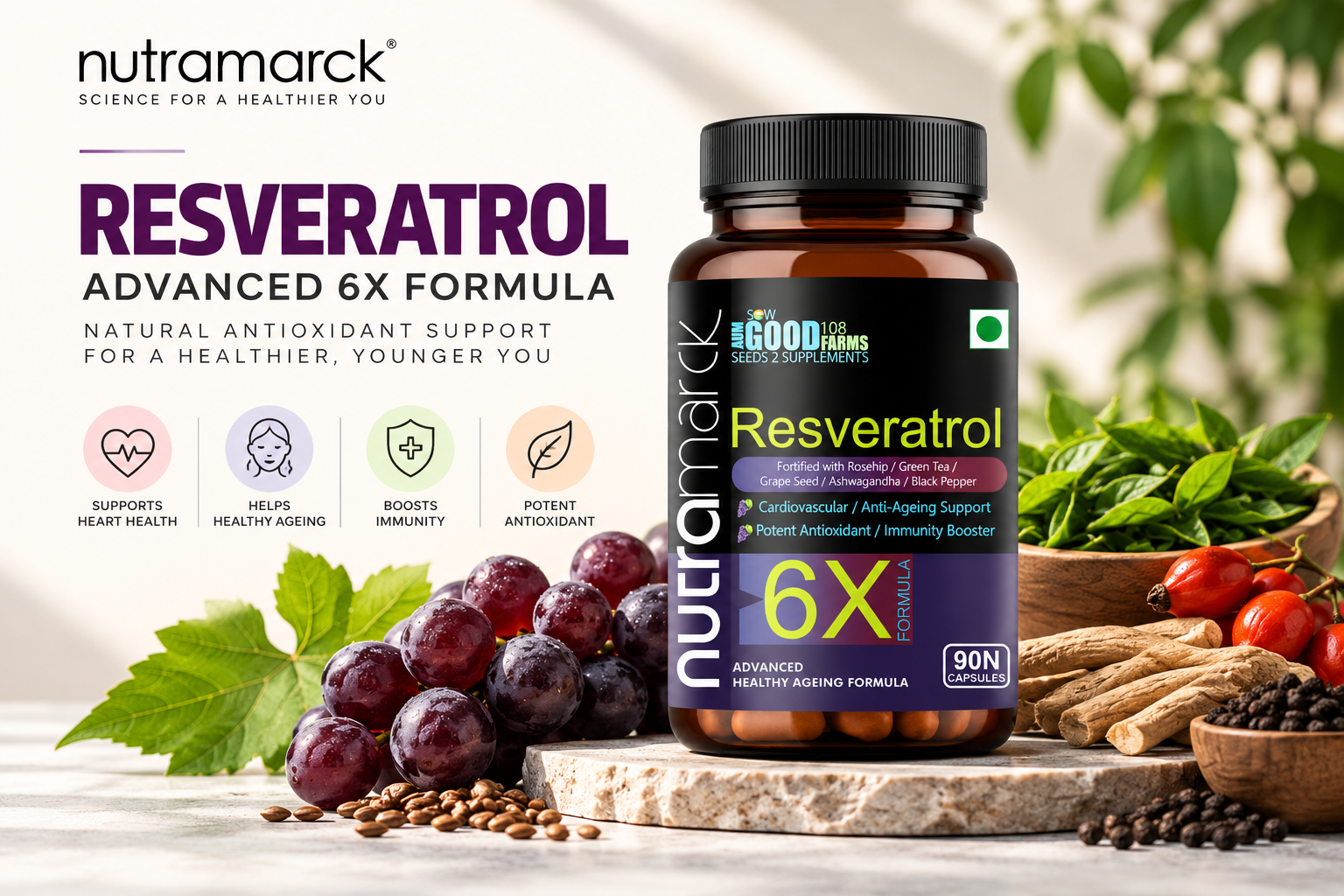
Looking for resveratrol in a convenient capsule format?
Explore NutraMarck Resveratrol Antioxidant Capsules
What Is Resveratrol?
Resveratrol is a naturally occurring polyphenolic compound produced by certain plants.
It belongs to a group of compounds known as stilbenes.
Plants can produce resveratrol as part of their response to environmental stresses.
Resveratrol has attracted considerable scientific interest because of its antioxidant-related biological activity and its potential influence on several cellular pathways.
However, discovering interesting biological activity in a laboratory does not automatically mean the same compound will prevent or treat disease in humans.
That distinction is essential when discussing resveratrol.
Where Does Resveratrol Come From?
Resveratrol occurs naturally in several foods.
Common dietary sources include:
- Grapes
- Grape skin
- Blueberries
- Cranberries
- Peanuts
- Pistachios
- Certain other berries
Red wine also contains some resveratrol because it is produced using grape skins.
However, this does not mean drinking more wine is a sensible way to increase resveratrol intake.
Alcohol carries established health risks, so resveratrol should never be used as a reason to encourage alcohol consumption.
What Is Trans-Resveratrol?
Search for resveratrol supplements and you’ll frequently encounter:
Trans-Resveratrol
Resveratrol can exist in different structural forms, including:
trans-resveratrol and cis-resveratrol.
Trans-resveratrol is the form most commonly discussed in scientific research and dietary supplements.
Therefore, when comparing products, don’t simply look at a large number on the front label.
Check exactly:
What form of resveratrol is provided?
and
How much is present per serving?
Why Is Resveratrol Called an Antioxidant?
Normal metabolism produces reactive molecules known as free radicals and other reactive species.
The body has its own antioxidant defence systems that help maintain balance.
Resveratrol has demonstrated antioxidant-related activity and can influence pathways associated with oxidative stress in experimental research.
This is why it is frequently described as an antioxidant polyphenol.
However:
Antioxidant does not mean miracle cure.
A supplement containing an antioxidant should not automatically be assumed to:
- Prevent cancer
- Reverse ageing
- Detox the entire body
- Prevent every chronic disease
Human health is far more complicated.
Potential Resveratrol Benefits
Research into resveratrol spans several areas.
Some findings are promising.
Others are inconsistent.
And many mechanisms that appear impressive in laboratory research have not translated into equally dramatic effects in humans.
Let’s examine the major areas individually.
1. Resveratrol and Healthy Ageing
“Resveratrol anti ageing” is one of the most popular search intents surrounding this ingredient.
Much of the scientific interest comes from research into cellular pathways involved in:
- Energy metabolism
- Oxidative stress
- Inflammation
- Cellular signalling
- Age-related biological processes
Resveratrol has also attracted attention because of research involving sirtuins, proteins associated with several cellular processes.
But an important distinction is needed.
Resveratrol has NOT been proven to stop human ageing.
Nor has it been demonstrated to dramatically extend human lifespan.
Research into longevity biology is complex, and findings from cells or animals cannot automatically be applied to humans.
A better interpretation is:
Resveratrol is an interesting compound being investigated in healthy-ageing research.
That is very different from calling it a proven anti-ageing treatment.
2. Resveratrol Benefits for Skin
Skin ageing is influenced by several factors.
These include:
- UV exposure
- Genetics
- Smoking
- Nutrition
- Sleep
- Environmental exposure
- Oxidative stress
- Natural ageing
Because resveratrol has antioxidant-related properties, it has been investigated in skin and dermatological research.
This has helped make resveratrol popular in both:
topical skincare
and
oral beauty supplements.
However, oral resveratrol capsules should not be promoted as a treatment for acne, pigmentation, eczema or other skin disorders without appropriate evidence.
For healthy-looking skin, the basics still matter enormously:
Sun Protection + Nutrition + Sleep + Hydration + Appropriate Skin Care
A supplement is secondary to those fundamentals.
For people looking for an antioxidant-focused capsule formulation:
View NutraMarck Resveratrol Antioxidant Capsules
3. Resveratrol and Heart Health
Cardiovascular research is another major area of interest.
Scientists have investigated resveratrol in relation to several cardiovascular and metabolic markers.
These include research involving:
- Blood pressure
- Endothelial function
- Lipid metabolism
- Oxidative stress
- Inflammatory pathways
Results across clinical studies and meta-analyses have not always been consistent.
This means resveratrol should not be positioned as a replacement for medication or established cardiovascular care.
For heart health, much stronger fundamentals include:
Not Smoking → Exercise → Healthy Diet → Blood Pressure Control → Cholesterol Management → Diabetes Management → Healthy Body Weight
Resveratrol may be scientifically interesting, but it does not replace these measures.
4. Resveratrol and Oxidative Stress
Oxidative stress occurs when reactive species and antioxidant defence systems become imbalanced.
Resveratrol has been extensively investigated for its effects on oxidative-stress pathways.
This is one of the stronger biological reasons resveratrol attracts interest.
But oxidative stress itself is involved in many biological processes.
Therefore, the phrase:
“supports antioxidant defence”
is much more responsible than saying:
“prevents all diseases caused by oxidative stress.”
5. Resveratrol and Inflammation Research
Researchers have also studied resveratrol’s interactions with pathways involved in inflammation.
This does not mean resveratrol should be considered an anti-inflammatory medicine.
Inflammation can be:
- Acute
- Chronic
- Protective
- Harmful
- Disease-specific
Its causes can differ substantially.
Therefore, people with persistent inflammation or inflammatory diseases should not self-treat solely with resveratrol supplements.
6. Resveratrol and Metabolic Health
Another important area of research involves metabolic health.
Clinical studies have investigated resveratrol in relation to:
- Glucose metabolism
- Insulin sensitivity
- Lipid metabolism
- Metabolic signalling
Some studies have reported potentially favourable effects in particular populations, while others have shown limited or inconsistent results.
Therefore:
Resveratrol is not a treatment for diabetes.
People using glucose-lowering medication should also be particularly careful with supplements and discuss them with an appropriate healthcare professional.
7. Resveratrol and Brain Health
Researchers have investigated resveratrol in relation to:
- Cerebral blood flow
- Cognition
- Oxidative stress
- Age-related neurological processes
This is scientifically interesting but still an evolving field.
It would be inappropriate to claim that resveratrol:
prevents dementia
or
treats Alzheimer’s disease.
Such claims go far beyond current evidence for dietary supplements.
8. Resveratrol Benefits for Women
Resveratrol is often included in supplements marketed toward women because of its association with:
- Antioxidant nutrition
- Skin wellness
- Healthy ageing
- Metabolic health
However, resveratrol does not suddenly become a different compound in women.
Research into specific women’s health outcomes remains an evolving area.
Pregnant or breastfeeding women should not begin concentrated resveratrol supplementation without appropriate professional advice.
9. Resveratrol Benefits for Men
Men may also be interested in resveratrol for:
- Antioxidant support
- Cardiovascular wellness
- Metabolic health
- Healthy ageing
But be cautious with claims that resveratrol will automatically:
- Dramatically increase testosterone
- Build muscle
- Treat erectile dysfunction
- Reverse male ageing
Evidence does not justify these broad promises.
Resveratrol and Longevity: Can It Make You Live Longer?
This is perhaps the most exaggerated claim surrounding resveratrol.
Much of the excitement around resveratrol and longevity originated from experimental research involving biological pathways associated with ageing.
This produced headlines suggesting resveratrol might be a “longevity molecule.”
But there is currently no good evidence demonstrating that taking resveratrol capsules will substantially extend human lifespan.
Longevity depends on an enormous range of factors:
Genetics + Nutrition + Exercise + Sleep + Smoking + Alcohol + Metabolic Health + Environment + Healthcare
No single supplement can replace these.
Resveratrol vs Glutathione
Both ingredients are associated with antioxidant biology, but they are fundamentally different.
Resveratrol
A plant-derived polyphenolic compound.
Glutathione
A naturally occurring tripeptide produced within the body.
They work through different biological mechanisms and should not be considered interchangeable.
People interested in antioxidant nutrition can read our complete Glutathione Benefits Guide as well.
Resveratrol vs CoQ10
Another common comparison is:
Resveratrol vs CoQ10
Again, these are different compounds.
Coenzyme Q10 participates in mitochondrial energy production and antioxidant processes.
Resveratrol is a plant-derived polyphenol investigated for several cellular signalling and antioxidant-related effects.
One isn’t universally “better.”
The appropriate choice depends on the individual’s nutritional objective.
Resveratrol vs NMN
Resveratrol and NMN are frequently grouped together in longevity marketing.
NMN—nicotinamide mononucleotide—is a precursor involved in NAD+ metabolism.
Resveratrol is a polyphenol.
They are not the same compound and have different biological roles.
Claims suggesting that combining the two will dramatically reverse human ageing should be treated cautiously.
Resveratrol vs Grape Seed Extract
Resveratrol is associated strongly with grapes, but it is not identical to grape seed extract.
Resveratrol
A specific polyphenolic compound.
Grape Seed Extract
Contains a mixture of polyphenols, particularly proanthocyanidins.
Therefore:
Resveratrol ≠ Grape Seed Extract
Always check the actual ingredient list.
Resveratrol Foods vs Supplements
Can you obtain resveratrol from food?
Yes.
Dietary sources include grapes, berries, peanuts and certain other plant foods.
However, the amount of resveratrol naturally present in foods can differ significantly.
Supplements provide concentrated quantities that may be substantially higher than typical dietary exposure.
That is precisely why supplement dosage and safety deserve consideration.
A supplement should complement—not replace—a diet rich in varied plant foods.
How Much Resveratrol Should You Take?
There is no universally established resveratrol dose appropriate for every health goal.
Human clinical studies have used widely varying amounts.
This makes statements such as:
“Everyone needs exactly X mg of resveratrol”
too simplistic.
The appropriate amount depends on:
- Product formulation
- Concentration
- Individual circumstances
- Intended use
- Other ingredients
- Medication use
Follow the directions of the specific supplement rather than automatically copying the highest dose you find online.
Best Time to Take Resveratrol
There is no universally established hour at which resveratrol suddenly becomes more effective.
You’ll see recommendations for:
Morning
With breakfast
With fat
Before meals
At night
But evidence does not establish one universal timing strategy for every formulation and person.
For most users:
Consistency + Correct Serving + Product Directions
matter more than obsessing over an exact clock time.
Should Resveratrol Be Taken With Food?
This can depend on the formulation.
Resveratrol’s absorption and metabolism are complex, and oral bioavailability has been an important issue in research.
If your product directions recommend taking it with food, follow those directions.
Do not assume that doubling or tripling the serving will compensate for bioavailability.
What Is Resveratrol Bioavailability?
Bioavailability describes how much of an ingested substance becomes available to the body.
Resveratrol is absorbed from the gastrointestinal tract but is also rapidly metabolized.
This is one reason researchers continue to investigate different formulations and delivery approaches.
It also explains why:
More milligrams ≠ automatically better results.
Product quality and formulation matter too.
How Long Does Resveratrol Take to Work?
There is no universal answer.
Resveratrol is not like caffeine, where you may feel an acute stimulant effect relatively quickly.
Any measurable effects depend on:
- What outcome is being assessed
- Dose
- Formulation
- Individual physiology
- Health status
- Duration of supplementation
Be cautious of claims such as:
“Reverse ageing in seven days.”
Such statements are not supported by credible human evidence.
Resveratrol Side Effects
Resveratrol is generally tolerated in many research settings, but concentrated supplements can still produce unwanted effects.
At higher intakes, reported gastrointestinal effects can include:
- Nausea
- Abdominal discomfort
- Diarrhoea
Individual responses can differ.
Higher doses should not be assumed to produce better outcomes.
Who Should Be Careful With Resveratrol?
Professional advice is particularly sensible if you:
- Take prescription medication
- Use anticoagulant or antiplatelet medication
- Have a bleeding disorder
- Are preparing for surgery
- Have an ongoing medical condition
- Are pregnant
- Are breastfeeding
Supplements can interact with medications or influence biological pathways.
“Natural” does not automatically mean interaction-free.
Can Resveratrol Be Taken Every Day?
Resveratrol has been administered daily in many clinical studies.
But this does not establish one universal daily amount suitable for everyone indefinitely.
Follow the specific product directions and consider your overall health and medication use.
How to Choose the Best Resveratrol Supplement
Resveratrol products can look similar while differing substantially in formulation.
Before buying, consider these factors.
1. Check the Form
Look beyond the word Resveratrol.
Check whether the label specifies the form being used, including whether trans-resveratrol is present.
2. Check the Amount Per Serving
Always distinguish:
Amount per capsule
from
Amount per recommended serving.
3. Read the Complete Formula
Some resveratrol supplements contain additional ingredients.
More ingredients do not automatically mean better results.
Understand what you’re actually taking.
4. Avoid Miracle Anti-Ageing Claims
Claims such as:
“Reverse ageing.”
“Live 20 years longer.”
“Erase wrinkles permanently.”
should immediately raise questions.
Human evidence does not justify these promises.
5. Consider Manufacturing Quality
For concentrated supplements, ingredient identity, purity, manufacturing standards and transparent labelling matter.
For a convenient capsule formulation, review the complete product details here:
Check NutraMarck Resveratrol Antioxidant Capsules
Resveratrol Supplement or Healthy Diet?
This shouldn’t be an either/or question.
The foundation of healthy ageing remains:
Vegetables + Fruits + Adequate Protein + Healthy Fats + Exercise + Sleep + Sun Protection + Not Smoking + Metabolic Health
Supplements sit on top of those fundamentals.
They don’t replace them.
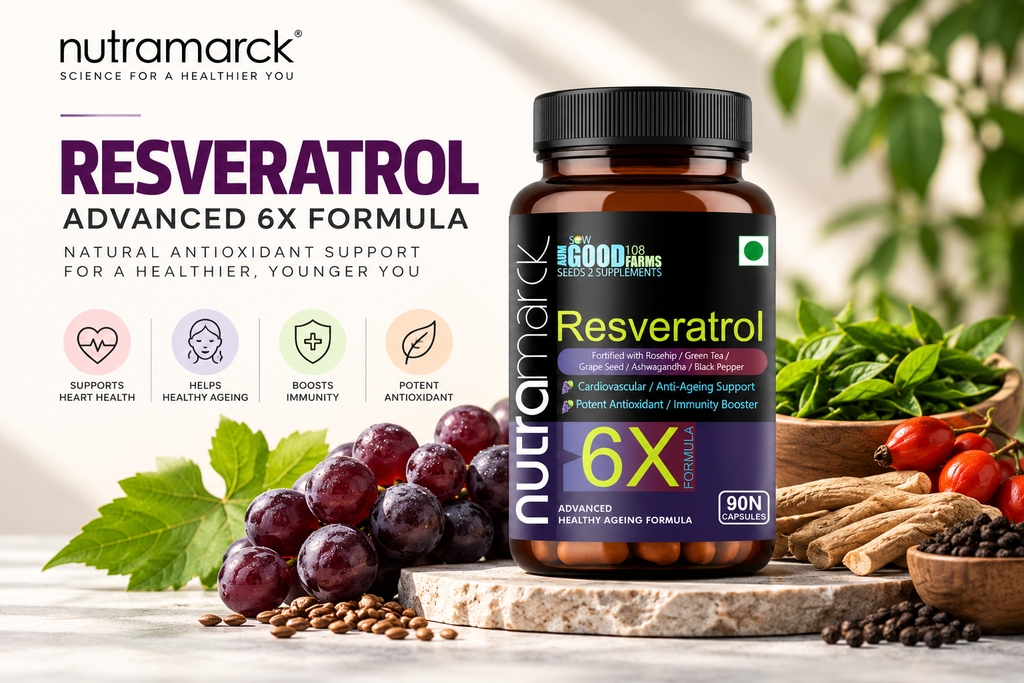
NutraMarck Resveratrol Antioxidant Capsules
For people looking to incorporate resveratrol into their supplement routine, NutraMarck offers a convenient capsule format.
Before using any supplement, review its complete ingredients, serving information and directions and consider whether it fits your individual needs.
Explore NutraMarck Resveratrol Antioxidant Capsules
Frequently Asked Questions About Resveratrol
What are the main benefits of resveratrol?
Resveratrol is a polyphenolic compound investigated for antioxidant activity and potential effects involving cardiovascular, metabolic and healthy-ageing pathways. Human evidence varies depending on the outcome studied.
What is resveratrol used for?
People commonly use resveratrol supplements for antioxidant nutrition and healthy-ageing support. Researchers are investigating several additional applications, but this should not be confused with proven disease treatment.
Is resveratrol anti-ageing?
Resveratrol interacts with biological pathways involved in ageing research, but it has not been proven to stop or reverse human ageing.
Is resveratrol good for skin?
Resveratrol has antioxidant-related properties and is studied in skin research. However, oral resveratrol supplements should not be considered treatments for skin diseases.
What is trans-resveratrol?
Trans-resveratrol is one structural form of resveratrol and is commonly used and investigated in supplements and research.
Is resveratrol good for heart health?
Resveratrol has been investigated for several cardiovascular markers, but research results are mixed and it should not replace established cardiovascular treatment or lifestyle measures.
What is the best time to take resveratrol?
There is no universally proven best time. Following product directions consistently is more important than trying to identify one perfect hour.
Can I take resveratrol every day?
Daily use has been studied, but appropriate amounts vary by formulation and individual circumstances. Follow the directions of the specific supplement.
Does resveratrol help with weight loss?
Evidence does not support treating resveratrol as a reliable standalone weight-loss solution.
Does resveratrol increase testosterone?
Current evidence does not justify promising that resveratrol supplementation will significantly increase testosterone in healthy men.
Does resveratrol make you look younger?
No supplement can guarantee younger-looking skin. Skin ageing depends on genetics, UV exposure, lifestyle, nutrition and many other factors.
Is resveratrol the same as grape seed extract?
No. Resveratrol is a specific polyphenolic compound, while grape seed extract contains a broader mixture of plant compounds.
Is resveratrol safe?
Resveratrol is tolerated by many people in research settings, but side effects and interactions are possible. People using medication or managing medical conditions should seek appropriate professional advice.
The Bottom Line
Resveratrol is a fascinating plant-derived polyphenol with a substantial amount of experimental research behind it.
Its antioxidant activity and potential interactions with pathways involved in metabolism, cardiovascular health, skin biology and ageing make it scientifically interesting.
But there’s an important difference between:
promising research
and
proven anti-ageing treatment.
Resveratrol has not been proven to reverse ageing, dramatically extend human lifespan or prevent chronic disease.
A better approach is to treat resveratrol as one potential component of a broader wellness routine built around:
Good Nutrition → Exercise → Sleep → Healthy Weight → Sun Protection → No Smoking → Appropriate Healthcare
If you’re considering a resveratrol supplement, focus on transparent formulation and realistic claims rather than miracle promises.
Looking for Resveratrol Capsules?
Review the formulation, serving information and product details of NutraMarck Resveratrol Antioxidant Capsules before deciding whether it fits your wellness routine.



Add comment