PCOS Diet Plan for Indian Women: 7-Day Meal Plan, Best Foods & Foods to Avoid
Living with Polycystic Ovary Syndrome (PCOS) can make everyday food choices feel confusing.
Should you stop eating rice? Are rotis allowed? Is dairy bad for PCOS? Can you eat fruit? Do you need to follow a low-carbohydrate diet?
The internet is full of restrictive PCOS diet rules, but many are not supported by strong scientific evidence.
The good news is that there is no single diet that every woman with PCOS must follow.
A balanced, sustainable eating pattern can support metabolic health, weight management when appropriate, and overall well-being.
This guide provides a practical 7-day Indian PCOS diet plan using familiar foods such as dal, roti, vegetables, paneer, curd, sprouts and seasonal fruits.
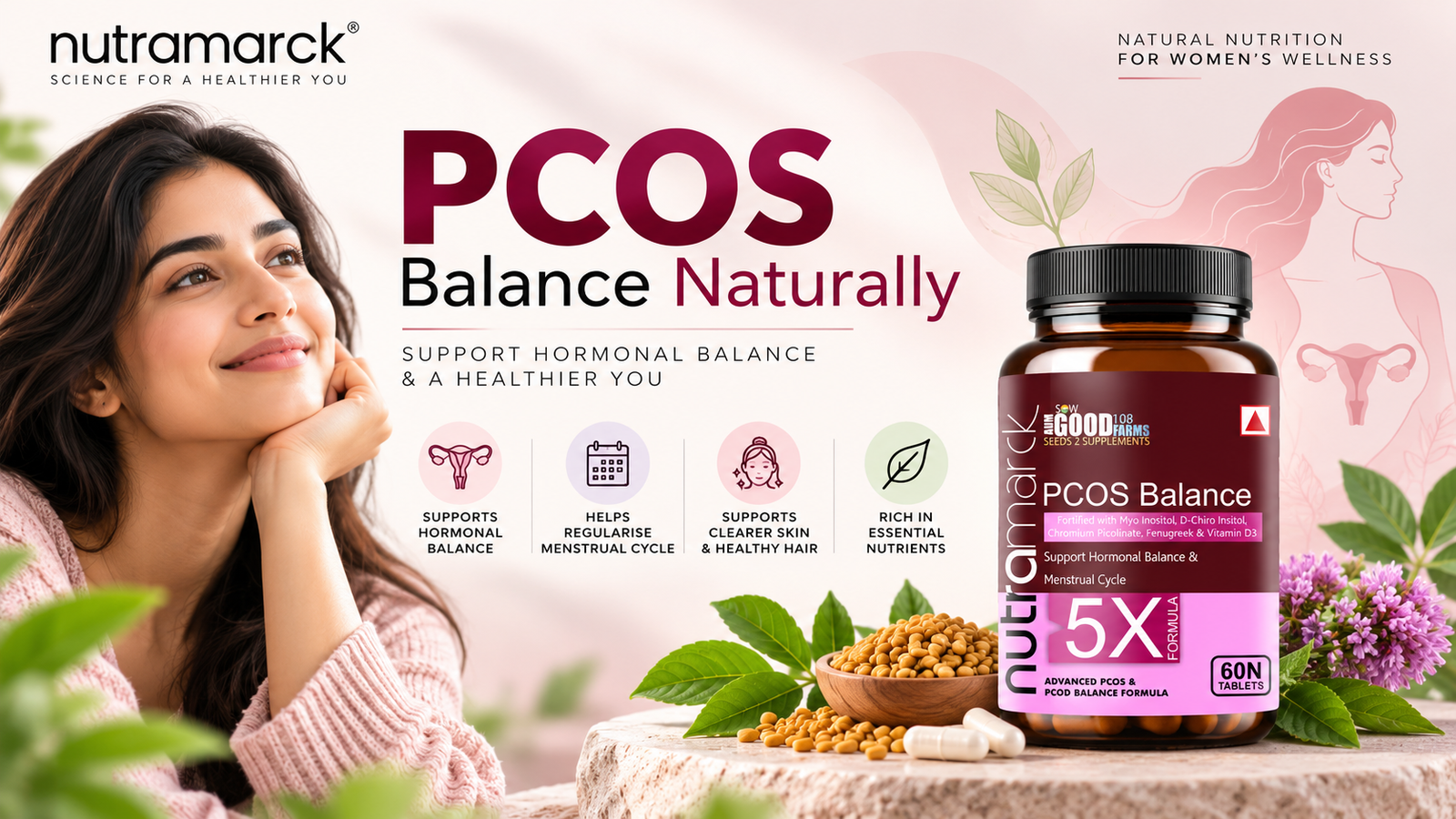
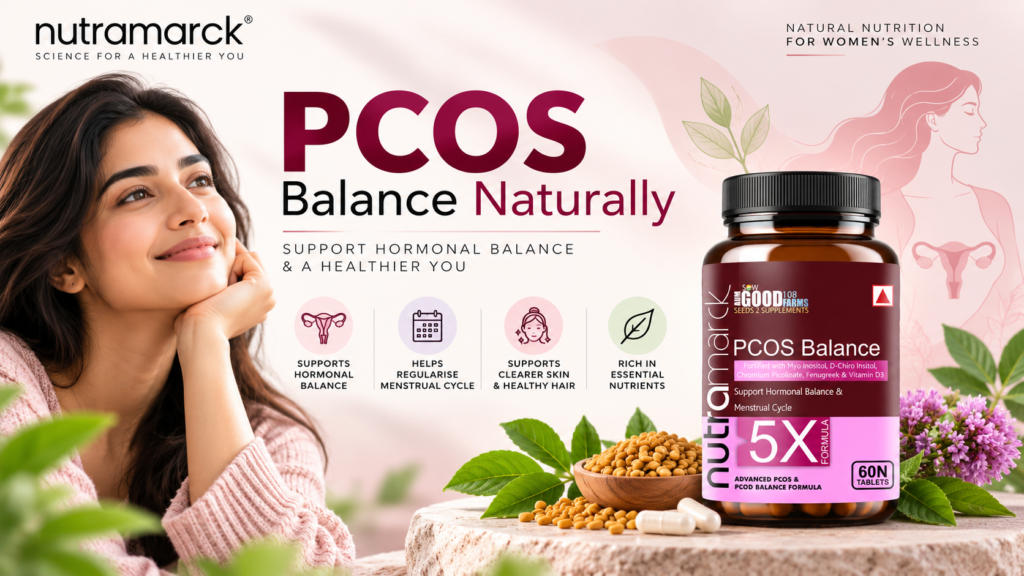
For women exploring nutritional support alongside their lifestyle routine, discover NutraMarck PCOS Balance Tablets and review the full ingredient information.
What Is the Best Diet for PCOS?
PCOS is a hormonal and metabolic condition that can affect menstrual cycles, ovulation, androgen activity and insulin sensitivity.
Insulin resistance is common among women with PCOS, although it does not affect everyone equally.
A practical PCOS-friendly eating pattern generally focuses on:
- Adequate protein
- Fibre-rich carbohydrates
- Vegetables and whole fruits
- Healthy fats
- Regular, balanced meals
- Appropriate portion sizes
- Limiting excessive added sugar
According to the 2023 International Evidence-Based PCOS Guideline, no single dietary composition has demonstrated clear superiority for all women with PCOS.
The most useful diet is one that meets nutritional needs and can be maintained long-term.
7-Day Indian PCOS Diet Plan
The following meal plan is a general example for adults, not a prescribed calorie-restricted or weight-loss diet. Portions and food choices should be adjusted according to individual needs, allergies, activity levels, pregnancy status and medical conditions.
| Day | Breakfast | Lunch | Evening Snack | Dinner |
|---|---|---|---|---|
| Monday | Besan chilla + curd | Roti + dal + mixed vegetables | Apple + nuts | Paneer bhurji + roti + salad |
| Tuesday | Vegetable oats + egg/tofu | Brown rice + rajma + salad | Roasted chana | Vegetable khichdi + curd |
| Wednesday | Moong dal chilla | Roti + chole + vegetables | Guava + peanuts | Tofu/paneer + vegetables + roti |
| Thursday | Idli + sambar | Roti + dal + bhindi | Unsweetened curd + seeds | Vegetable pulao + raita |
| Friday | Paneer/tofu sandwich | Rice + sambar + vegetables | Orange + nuts | Roti + mixed dal + salad |
| Saturday | Vegetable poha + curd | Roti + paneer/tofu curry | Roasted makhana | Dal + vegetables + rice |
| Sunday | Dosa + sambar | Rajma rice + salad | Seasonal fruit + nuts | Vegetable soup + paneer/tofu + roti |
Water can be the main beverage throughout the day. Additional snacks may be appropriate depending on hunger and energy requirements.
Best Foods for PCOS
1. Protein-Rich Foods
Protein contributes to muscle maintenance and satiety.
Good Indian options include:
- Dal and lentils
- Chickpeas and rajma
- Paneer and curd
- Tofu and soy foods
- Eggs
- Fish and lean poultry
Including a protein source in main meals can make a balanced diet easier to maintain.
2. Fibre-Rich Carbohydrates
Carbohydrates do not need to be eliminated because of PCOS.
Instead, consider fibre-rich choices such as whole grains, oats, beans, lentils and vegetables.
Fibre supports digestive health and contributes to a balanced eating pattern.
3. Vegetables
Vegetables provide vitamins, minerals, fibre and a variety of plant compounds.
Choose a mix of seasonal vegetables rather than relying on a single so-called superfood.
4. Whole Fruits
Women with PCOS can eat fruit.
Apples, guava, oranges, berries, papaya and other whole fruits can fit into a balanced diet.
Whole fruit is generally preferable to frequently consuming sugar-sweetened fruit drinks.
5. Healthy Fats
Nuts, seeds and appropriate cooking oils provide dietary fats that are part of normal nutrition.
Moderation and overall dietary balance matter more than treating one particular seed as a hormonal cure.
Foods to Limit With PCOS
You do not need a long list of permanently banned foods.
However, it can be useful to reduce frequent consumption of:
- Sugary soft drinks
- Excessive sweets and confectionery
- Highly refined snack foods
- Large portions of energy-dense fast food
- Foods containing substantial amounts of added sugar
Occasional treats can still fit into a balanced diet.
PCOS management is about sustainable habits, not perfect eating.
Is Rice Good or Bad for PCOS?
Rice is not automatically harmful for women with PCOS.
Both white and brown rice can fit into a balanced eating pattern.
Portion size, overall meal composition and individual metabolic needs matter.
For example, rice served with dal, vegetables and a protein source creates a more balanced meal than rice eaten alone.
Can Women With PCOS Eat Roti?
Yes.
Roti can be part of a PCOS-friendly Indian diet.
Whole-wheat roti provides carbohydrates and some fibre.
Pair it with dal, paneer, curd or another protein source and vegetables.
There is no universal requirement to eliminate wheat or gluten unless there is another medical reason.
Is Milk or Curd Bad for PCOS?
There is insufficient evidence to recommend that all women with PCOS avoid dairy.
Unsweetened curd, milk and paneer can provide useful nutrients.
People with lactose intolerance, allergies or other individual concerns may need alternatives.
PCOS Breakfast Ideas
A balanced breakfast can include protein, fibre-rich carbohydrates and other nutrient-dense foods.
Some practical options are:
- Besan chilla with curd
- Moong dal chilla
- Vegetable oats with eggs or tofu
- Idli with sambar
- Paneer sandwich on wholegrain bread
- Vegetable poha with a protein-rich side
The best breakfast is one that fits your preferences, nutritional needs and schedule.
PCOS Diet for Weight Loss
Weight management can be helpful for some women with PCOS, particularly when excess body weight contributes to metabolic risk.
However, not every woman with PCOS needs to lose weight.
Lifestyle improvements can provide health benefits even without significant changes on the weighing scale.
Avoid crash diets, detox drinks and extreme calorie restriction.
For individualised weight management, a registered dietitian can help develop an appropriate plan.
PCOS and Insulin Resistance
Insulin resistance is common in PCOS and may contribute to metabolic difficulties.
Balanced meals, physical activity, sufficient sleep and appropriate medical management can support metabolic health.
Some women may need additional clinical assessment or treatment.
Diet alone should not be presented as a guaranteed way to reverse insulin resistance.
Does Intermittent Fasting Help PCOS?
Intermittent fasting is often promoted for PCOS, but evidence specific to PCOS remains limited.
It is not established as a superior approach for every woman with the condition.
Restrictive eating schedules may be unsuitable for some individuals, particularly those with a history of disordered eating, pregnancy or certain medical conditions.
A sustainable, nutritionally adequate routine is more important than following a trend.
Exercise Alongside a PCOS Diet
Diet and physical activity work together to support long-term health.
Useful activities include:
- Brisk walking
- Cycling
- Swimming
- Resistance training
- Yoga for flexibility and general well-being
For many adults, at least 150 minutes of moderate-intensity aerobic activity each week, together with muscle-strengthening exercise, is a useful general goal.
Start at a level appropriate for your health and fitness.
Can Supplements Help With PCOS?
Some supplements are marketed for PCOS-related wellness.
Common ingredients discussed in research include:
- Myo-inositol
- D-chiro-inositol
- Vitamin D
- Chromium
- Certain botanical ingredients
Evidence varies, and no supplement should be described as a guaranteed treatment for PCOS, infertility or irregular menstrual cycles.
The 2023 international guideline notes that inositol may be considered in some circumstances, but evidence for important clinical benefits is limited and uncertain.
For women exploring a PCOS-focused nutritional formulation, NutraMarck offers a combination containing myo-inositol, D-chiro-inositol, chromium picolinate, fenugreek and vitamin D3.
Explore NutraMarck PCOS Balance Tablets →
Review the full ingredient quantities, recommended serving and precautions before use. Supplements should complement—not replace—appropriate medical care.
A Practical Daily PCOS Routine
Morning
Eat a balanced breakfast, stay hydrated and consider a short walk.
Afternoon
Choose a balanced lunch with vegetables, protein and suitable carbohydrates.
Evening
Include physical activity, a satisfying meal and time to unwind.
Night
Maintain a regular sleep schedule and follow any prescribed treatment.
Consistency matters more than attempting dramatic lifestyle changes overnight.
Women considering additional nutritional support can review NutraMarck PCOS Balance Tablets and discuss suitability with their healthcare professional.
Common PCOS Diet Mistakes
Eliminating All Carbohydrates
Carbohydrates are not automatically harmful. Quality, quantity and meal composition matter.
Depending on Detox Drinks
No detox tea or juice has been proven to cure PCOS.
Skipping Meals to Lose Weight Quickly
Extreme restriction can make adequate nutrition harder to maintain.
Treating Supplements as Medication Replacements
PCOS supplements are not substitutes for prescribed treatments.
Following One Diet for Everyone
PCOS affects individuals differently. A diet should reflect personal needs, cultural preferences and medical circumstances.
Frequently Asked Questions About PCOS Diet
What is the best Indian diet plan for PCOS?
A balanced diet including vegetables, whole fruits, fibre-rich carbohydrates, adequate protein and healthy fats is a practical starting point. No single dietary pattern is best for everyone.
Can I eat rice with PCOS?
Yes. Rice can be included in suitable portions as part of a balanced meal.
Can I eat roti with PCOS?
Yes. Whole-wheat roti with vegetables and protein-rich foods can fit into a PCOS-friendly diet.
Is curd good for PCOS?
Unsweetened curd can be part of a balanced diet unless you have an individual reason to avoid dairy.
Which fruits are best for PCOS?
A variety of whole fruits can be included. There is no need to rely on one specific fruit.
Is sugar completely prohibited in PCOS?
No. Limiting excessive added sugar is sensible, but an occasional sweet does not mean a diet has failed.
Does PCOS require a gluten-free diet?
Not routinely. A gluten-free diet is appropriate when medically indicated, such as for coeliac disease.
Can a PCOS diet regulate periods?
Nutrition and lifestyle interventions can support overall health and metabolic management, but dietary changes alone cannot guarantee regular menstrual cycles.
Can I lose weight with PCOS?
Weight management is possible, although individual experiences differ. A sustainable approach is preferable to extreme dieting.
Are PCOS supplements necessary?
Not for everyone. Their suitability depends on individual circumstances, formulation, evidence and medical advice.
Final Thoughts
A PCOS-friendly diet does not need to be complicated, expensive or restrictive.
Traditional Indian foods such as dal, roti, sabzi, curd, paneer, lentils, fruits and whole grains can form the foundation of balanced meals.
The goal is to develop sustainable habits that support metabolic health and overall well-being.
Nutrition works best alongside appropriate exercise, sleep, medical care and individualised treatment.
For women considering additional nutritional support, explore the formulation and product information of NutraMarck PCOS Balance Tablets →.



Add comment