
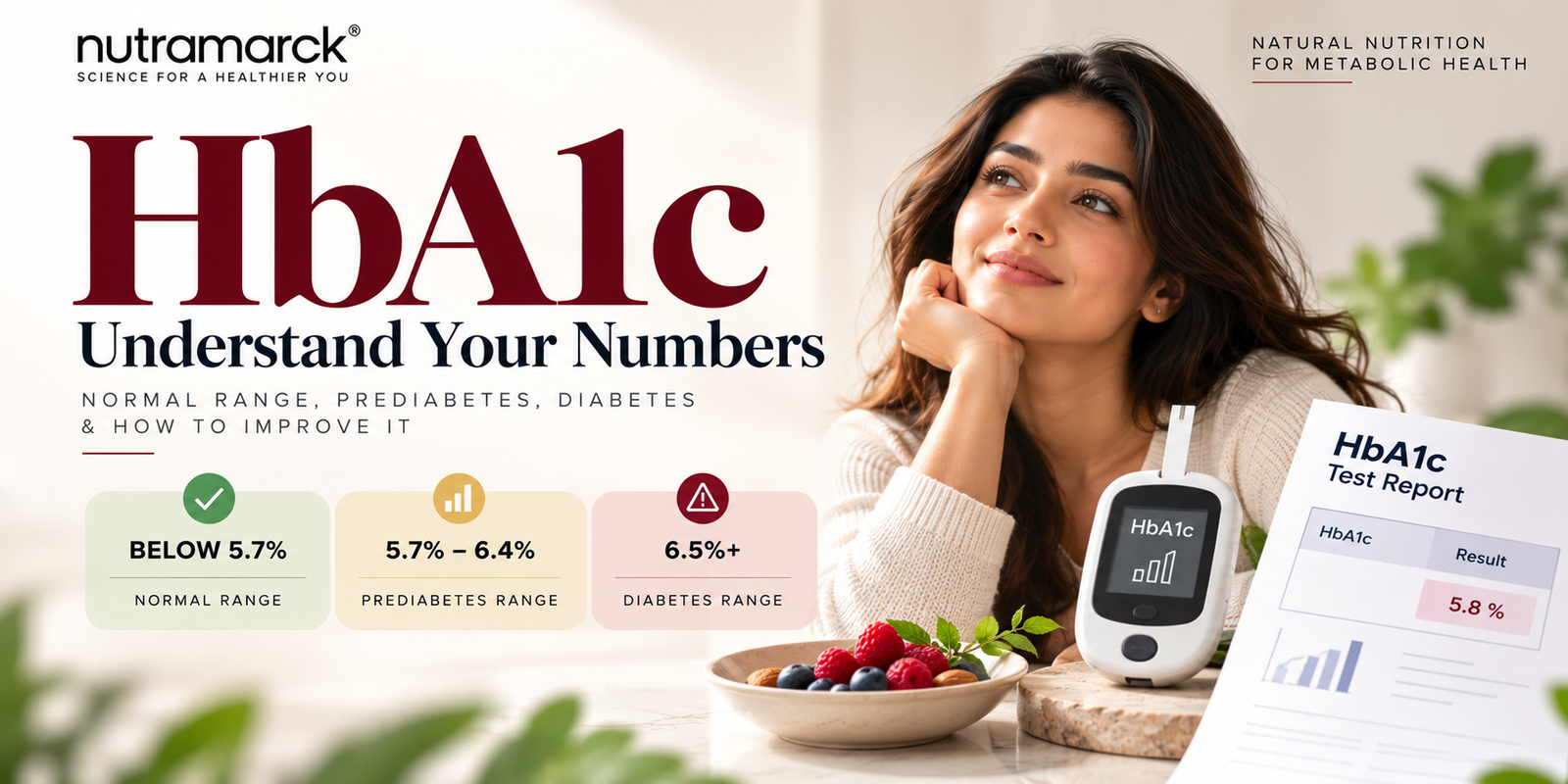
HbA1c Test: Normal Range, Diabetes Chart, Prediabetes Levels & How to Lower HbA1c
What does an HbA1c of 5.7%, 6.0% or 6.5% actually mean?
If you’ve recently had a blood sugar test, you may have noticed a number called HbA1c on your laboratory report.
Unlike a regular blood glucose test, which measures glucose at a particular moment, the HbA1c test provides information about average blood glucose exposure over approximately the previous two to three months.
It is widely used to help diagnose and monitor diabetes.
Understanding your HbA1c result can help you recognise metabolic risk and discuss appropriate next steps with your healthcare professional.
In this guide, we’ll explain the HbA1c normal range, prediabetes levels, diabetes thresholds, estimated average glucose, testing frequency and evidence-based ways to improve blood sugar management.
What Is the HbA1c Test?
HbA1c stands for glycated haemoglobin.
Haemoglobin is a protein found in red blood cells that carries oxygen throughout the body.
Glucose can attach to haemoglobin through a process called glycation.
The HbA1c test measures the percentage of haemoglobin that has glucose attached to it.
Because red blood cells circulate for approximately 120 days, HbA1c reflects glucose exposure over a period of weeks to months, with more recent glucose levels contributing substantially to the result.
It does not show every individual rise or fall in blood sugar.
HbA1c Normal Range: Complete Chart
For most non-pregnant adults, the following commonly used diagnostic categories apply.
| HbA1c Result | Interpretation |
|---|---|
| Below 5.7% | Normal range |
| 5.7%–6.4% | Prediabetes range |
| 6.5% or higher | Diabetes diagnostic range |
Important: A diabetes-range result usually needs confirmation with another appropriate test unless there is unequivocal hyperglycemia. Some medical conditions can affect HbA1c accuracy.
These thresholds are diagnostic categories, not personalised treatment targets.
What Does HbA1c 5.7% Mean?
An HbA1c result of 5.7% is at the lower boundary of the prediabetes range under commonly used criteria.
Prediabetes means blood glucose is higher than the normal range but does not meet the diagnostic criteria for diabetes.
Not everyone with prediabetes develops type 2 diabetes.
Lifestyle interventions and appropriate medical follow-up can help reduce future risk.
What Does HbA1c 6.0% Mean?
An HbA1c of 6.0% falls within the prediabetes range.
It suggests increased risk of developing type 2 diabetes.
A healthcare professional may recommend reviewing dietary habits, physical activity, weight management where appropriate and other metabolic risk factors.
What Does HbA1c 6.5% Mean?
An HbA1c of 6.5% or higher falls within the diabetes diagnostic range.
However, diagnosis generally requires appropriate confirmation and clinical interpretation.
Do not diagnose yourself or begin medication solely on the basis of one laboratory number.
HbA1c Levels and Estimated Average Blood Sugar
HbA1c can be translated into an estimated average glucose, or eAG.
The following values are approximate.
| HbA1c | Estimated Average Glucose |
|---|---|
| 5.0% | 97 mg/dL |
| 5.5% | 111 mg/dL |
| 6.0% | 126 mg/dL |
| 6.5% | 140 mg/dL |
| 7.0% | 154 mg/dL |
| 7.5% | 169 mg/dL |
| 8.0% | 183 mg/dL |
| 9.0% | 212 mg/dL |
| 10.0% | 240 mg/dL |
These are estimates, not direct fasting or post-meal glucose readings.
An individual’s actual glucose readings can vary considerably throughout the day.
HbA1c vs Fasting Blood Sugar: What’s the Difference?
Both tests are useful, but they measure different things.
| Feature | HbA1c Test | Fasting Plasma Glucose |
|---|---|---|
| What it measures | Longer-term glucose exposure | Glucose at the time of testing |
| Time period | Approximately 2–3 months | One point in time |
| Fasting required | Usually no | Yes |
| Common uses | Diabetes diagnosis and monitoring | Diabetes diagnosis and screening |
| Units | Percentage (%) | mg/dL |
A clinician may recommend one or both tests depending on your circumstances.
Is Fasting Required for an HbA1c Test?
No, fasting is generally not required for HbA1c testing.
You can usually have an HbA1c blood test at any time of day.
However, if your doctor has ordered fasting glucose or a fasting lipid profile at the same time, you may still need to fast for those additional tests.
Follow your laboratory’s instructions.
Why Is HbA1c Important?
HbA1c provides useful information about longer-term glucose management.
For people with diabetes, it can help clinicians evaluate how well a treatment plan is working.
For people without diagnosed diabetes, HbA1c may help identify prediabetes or diabetes.
However, HbA1c is only one part of metabolic assessment.
Blood pressure, cholesterol, kidney health, medication use and other factors also matter.
What Causes High HbA1c?
Several factors can contribute to elevated HbA1c.
1. Persistently Elevated Blood Glucose
HbA1c generally rises when average blood glucose remains elevated over time.
2. Insulin Resistance
Insulin resistance can make glucose regulation more difficult.
Over time, this may contribute to higher glucose levels.
3. Insufficient Insulin Production
In some individuals, the pancreas cannot produce enough insulin to maintain normal blood glucose.
4. Certain Medical Conditions
Illnesses and hormonal disorders may affect glucose regulation.
5. Medication-Related Factors
Certain medicines, including corticosteroids, can raise blood glucose.
People with diabetes may also experience higher glucose levels if their treatment plan needs adjustment.
Can HbA1c Be High Without Diabetes?
Yes.
An HbA1c between 5.7% and 6.4% falls within the prediabetes range under commonly used diagnostic criteria.
Additionally, some conditions affecting red blood cells can produce misleading HbA1c results.
This is why laboratory interpretation should consider the broader clinical picture.
What Can Affect HbA1c Accuracy?
HbA1c results may be less reliable in some circumstances, including:
- Certain types of anaemia
- Haemoglobin variants
- Recent blood transfusion
- Significant blood loss
- Conditions affecting red blood cell lifespan
- Pregnancy
- Certain kidney-related conditions
In these situations, clinicians may recommend alternative or additional glucose testing.
How to Lower HbA1c Naturally
Many people search for ways to reduce HbA1c.
For those with elevated glucose, sustainable lifestyle changes can improve glucose regulation.
However, people with diabetes may also require medication, and lifestyle changes should not replace prescribed treatment.
1. Choose Balanced Meals
Include vegetables, fibre-rich carbohydrates, adequate protein and suitable fats.
Meal composition and portions should reflect individual health needs.
2. Increase Physical Activity
Regular exercise can improve insulin sensitivity.
Walking, cycling, swimming and resistance training may all contribute to better metabolic health.
3. Manage Weight When Appropriate
For some people with excess body weight, gradual weight reduction can improve metabolic markers.
Not everyone needs to lose weight.
4. Improve Sleep Habits
Consistently inadequate sleep may negatively affect glucose regulation.
Aim for regular, sufficient sleep.
5. Limit Sugary Beverages
Reducing frequent consumption of sugar-sweetened drinks can support a balanced dietary pattern.
6. Follow Prescribed Treatment
If you have diabetes, take prescribed medication as directed.
Never stop medication because of an online supplement claim.
Best Indian Foods for Healthy Blood Sugar Management
There is no single food that reliably lowers HbA1c on its own.
Instead, focus on overall dietary quality.
Practical Indian food choices include:
- Dal and lentils
- Chickpeas and rajma
- Vegetables
- Whole grains
- Paneer and tofu
- Unsweetened curd
- Eggs
- Whole fruits
- Nuts and seeds
These foods can form part of a balanced eating plan.
Indian Diet Chart for Metabolic Wellness
| Meal | Example |
|---|---|
| Breakfast | Moong dal chilla with curd |
| Mid-morning | Guava or apple |
| Lunch | Roti, dal, vegetables and salad |
| Evening | Roasted chana |
| Dinner | Paneer/tofu with vegetables and roti |
This is a general example, not an individualised diabetes diet.
People using insulin or other glucose-lowering medication may require specific advice about carbohydrate intake and meal timing.
Can Walking Lower HbA1c?
Regular physical activity can improve glucose regulation.
Walking after meals may help reduce post-meal glucose rises.
Over time, consistent exercise can contribute to improved HbA1c in some individuals.
The response depends on overall health, activity level, treatment and other factors.
How Long Does It Take to Lower HbA1c?
HbA1c reflects glucose exposure over approximately two to three months.
Changes in glucose regulation can occur sooner, but the full effect on HbA1c generally takes time to become apparent.
The timeline depends on baseline glucose levels, treatment, lifestyle changes and individual health factors.
HbA1c and Insulin Resistance
Insulin resistance means the body’s cells respond less effectively to insulin.
Initially, the pancreas may compensate by producing additional insulin.
As a result, a person may have insulin resistance while their HbA1c remains within the normal range.
If compensation becomes insufficient, glucose levels may rise.
Therefore, a normal HbA1c does not necessarily rule out insulin resistance.
Berberine and HbA1c: What Does Research Say?
Berberine is a plant-derived compound that has been investigated for metabolic outcomes, including blood glucose and HbA1c.
Some clinical studies have reported potentially favourable changes in glucose-related markers.
However, research quality, study populations and formulations vary.
Berberine supplements are not established replacements for prescription diabetes medications.
They can also interact with medicines and may be inappropriate during pregnancy or breastfeeding.
For readers exploring botanical metabolic-wellness formulations, NutraMarck offers a combination of berberine, Ceylon cinnamon, Gymnema sylvestre, ashwagandha and black pepper.
Explore NutraMarck Berberine Metabolic Support Capsules →
Review the full product label and discuss suitability with a healthcare professional, particularly if you take glucose-lowering medication.
What Is a Good HbA1c Target for Someone With Diabetes?
For many non-pregnant adults with diabetes, an HbA1c target below 7% is commonly used.
However, treatment targets should be individualised.
A less stringent target may be appropriate for some people, while a lower target may be suitable for others when it can be achieved safely.
Age, health conditions, medication-related hypoglycemia risk and other factors influence the appropriate target.
How Often Should HbA1c Be Tested?
For people with diabetes, HbA1c is often checked approximately every three months when treatment changes or glucose goals are not being met.
Testing approximately every six months may be appropriate for people with stable glucose management.
For people without diabetes, screening frequency depends on individual risk factors and clinical recommendations.
HbA1c and PCOS
Women with Polycystic Ovary Syndrome may have increased risk of impaired glucose regulation.
However, HbA1c is not always the most accurate way to assess glucose status in PCOS.
The 2023 International Evidence-Based PCOS Guideline recommends a 75 g oral glucose tolerance test as the most accurate test for assessing glycemic status in women with PCOS, regardless of BMI.
A healthcare professional can recommend the appropriate screening approach.
Common HbA1c Myths
Myth: HbA1c Shows Today’s Blood Sugar
False. HbA1c reflects longer-term glucose exposure.
Myth: You Must Fast Before HbA1c Testing
False. HbA1c testing usually does not require fasting.
Myth: HbA1c 6.5% Always Confirms Diabetes Immediately
Not necessarily. Confirmatory testing is generally required unless there is unequivocal hyperglycemia.
Myth: Supplements Can Replace Diabetes Medication
False. Supplements should not replace prescribed treatment.
Myth: A Normal HbA1c Rules Out Insulin Resistance
False. Insulin resistance can exist before average glucose levels become elevated.
Frequently Asked Questions About HbA1c
What is the normal HbA1c range?
For most non-pregnant adults, an HbA1c below 5.7% falls within the normal diagnostic range.
Is HbA1c 5.7% normal?
An HbA1c of 5.7% is at the lower boundary of the prediabetes range under commonly used criteria.
Is HbA1c 6.0% dangerous?
An HbA1c of 6.0% is within the prediabetes range. It warrants appropriate evaluation and risk management but is not automatically an emergency.
Does HbA1c 6.5% mean diabetes?
An HbA1c of 6.5% or higher is in the diabetes diagnostic range. Appropriate confirmation and clinical interpretation are usually required.
Can HbA1c be reduced naturally?
Lifestyle interventions can improve glucose regulation in many people, although medication may also be necessary.
Is fasting required for HbA1c?
No, not for the HbA1c test itself.
What is the difference between HbA1c and fasting glucose?
HbA1c reflects longer-term glucose exposure, while fasting glucose measures blood glucose at one point in time.
Can stress affect HbA1c?
Persistent stress may influence glucose regulation in some individuals, but many factors contribute to HbA1c.
Can HbA1c change in one month?
HbA1c can begin changing as glucose patterns change, but it reflects approximately two to three months of glucose exposure.
Can berberine lower HbA1c?
Some studies have reported changes in HbA1c with berberine, but evidence is not sufficient to use supplements as substitutes for established diabetes treatment.
Final Thoughts
The HbA1c test is an important tool for understanding longer-term blood glucose exposure.
Knowing the difference between normal, prediabetes and diabetes diagnostic ranges can help you interpret results more confidently.
However, one laboratory number should never be considered in isolation.
Appropriate testing, balanced nutrition, physical activity, sleep and medical care are the foundations of long-term metabolic health.
For readers researching botanical metabolic-wellness ingredients, review the formulation and precautions of NutraMarck Berberine Metabolic Support Capsules.
References
- NIDDK — The A1C Test & Diabetes
- CDC — A1C Test for Diabetes and Prediabetes
- American Diabetes Association — Diabetes Diagnosis
- International Evidence-Based PCOS Guideline
- NCCIH — Diabetes and Dietary Supplements
Medical Disclaimer: This article is for educational purposes only and does not constitute medical advice. HbA1c interpretation, diabetes diagnosis, treatment targets and medication decisions require appropriate clinical assessment. Supplements should not replace prescribed diabetes treatment.





Add comment