
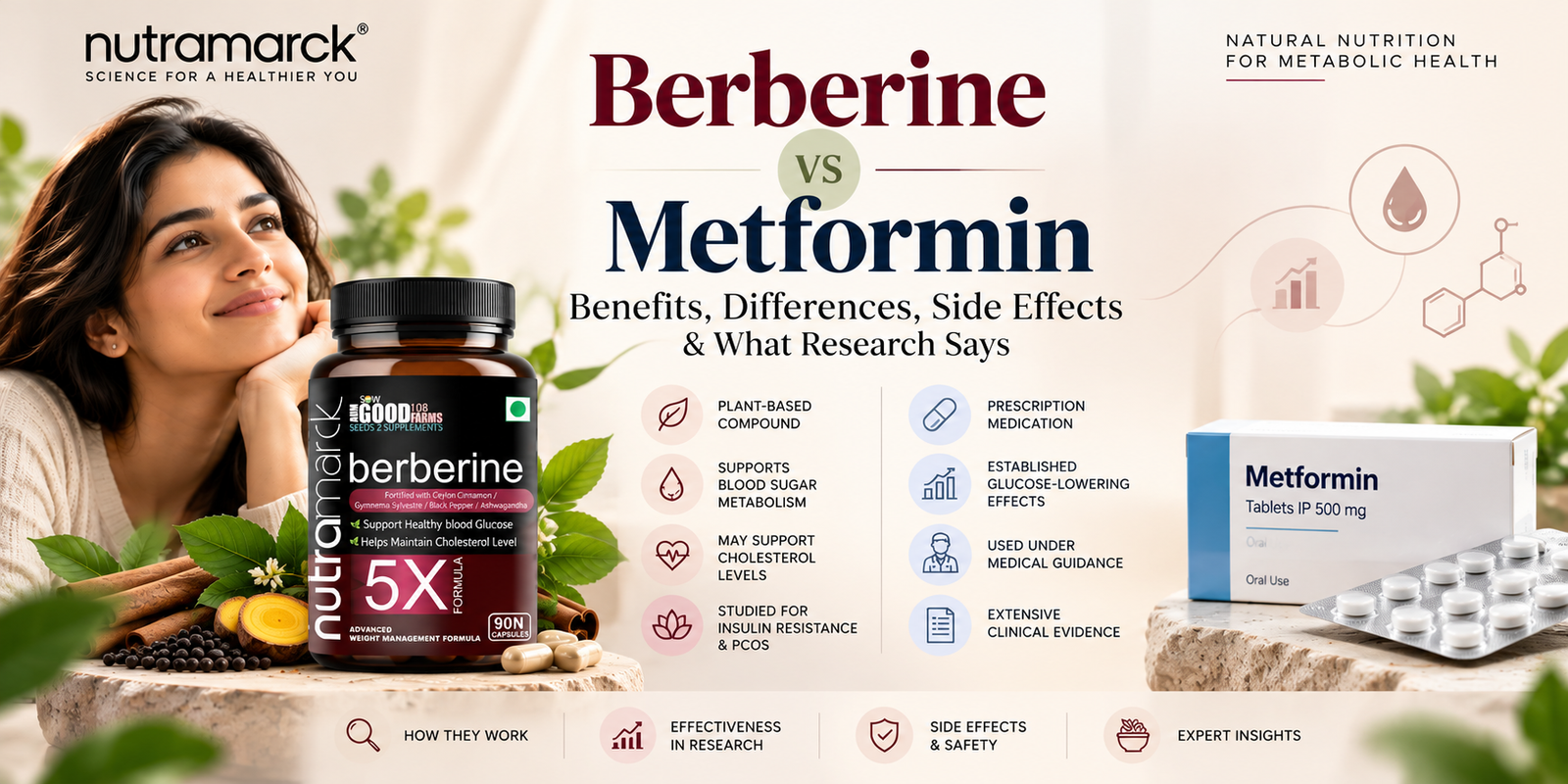
Berberine vs Metformin: Benefits, Differences, Side Effects & What Research Says
Berberine vs metformin is an increasingly discussed comparison among people researching blood sugar regulation, insulin resistance, metabolic health and Polycystic Ovary Syndrome (PCOS).
Both have been investigated for their effects on glucose metabolism, but there is an important difference.
Metformin is a prescription medicine with extensive clinical evidence. Berberine is a plant-derived compound available in certain dietary supplements.
They are not interchangeable.
So why are they frequently compared? Does berberine work like metformin? Is one safer? And can someone take both together?
This guide examines the science, potential benefits, limitations and safety considerations.
What Is Berberine?
Berberine is a naturally occurring alkaloid found in several plants, including species of Berberis.
It has attracted scientific interest because of its potential effects on metabolic pathways involved in glucose and lipid regulation.
Research has explored berberine in relation to:
- Blood glucose markers
- Insulin sensitivity
- Lipid metabolism
- Metabolic signalling
- Certain PCOS-related outcomes
However, research findings vary in quality and consistency.
Berberine supplements should not be regarded as proven replacements for prescription diabetes medication.
For readers interested in botanical metabolic-wellness formulations, explore NutraMarck Berberine Metabolic Support Capsules.
What Is Metformin?
Metformin is a prescription medication widely used in the management of type 2 diabetes.
It primarily reduces glucose production by the liver and improves aspects of glucose regulation.
Metformin has been studied extensively in large clinical populations.
Healthcare professionals may also prescribe it for certain other conditions or circumstances, including selected cases involving PCOS.
Unlike dietary supplements, prescription medicines are subject to established requirements for drug approval, quality, clinical evidence and medical supervision.
Berberine vs Metformin: Key Differences
| Feature | Berberine | Metformin |
|---|---|---|
| Type | Plant-derived alkaloid | Prescription medication |
| Main interest | Metabolic-health research | Established glucose-lowering treatment |
| Evidence | Smaller and variable-quality clinical studies | Extensive clinical evidence |
| Regulation | Supplement rules depend on jurisdiction | Regulated as a medicine |
| Blood glucose effects | Potential effects reported in studies | Established glucose-lowering effects |
| PCOS research | Limited and evolving | Used in selected patients under clinical guidance |
| Side effects | Often gastrointestinal; interactions possible | Often gastrointestinal; rare serious complications |
| Medical supervision | Strongly advisable with health conditions or medication | Required as a prescription treatment |
| Diabetes treatment replacement | No | Established treatment option |
The most important difference is the strength and reliability of clinical evidence.
How Does Berberine Work?
Berberine has been studied for its influence on several biological pathways.
One frequently discussed pathway involves AMP-activated protein kinase, or AMPK.
AMPK participates in cellular energy regulation.
However, berberine’s biological effects are complex, and researchers continue to investigate how laboratory findings translate into clinical outcomes.
It would be inaccurate to claim that all berberine supplements work exactly like metformin.
How Does Metformin Work?
Metformin primarily helps reduce hepatic glucose production.
It also affects glucose metabolism through additional mechanisms, including actions involving the gastrointestinal tract.
Its clinical effects, prescribing considerations and monitoring requirements are well established.
Metformin should only be used according to professional medical guidance.
Is Berberine as Effective as Metformin?
This is one of the most important questions in the comparison.
Some small clinical studies have reported improvements in metabolic markers among people taking berberine.
However, these findings do not establish that berberine is clinically equivalent to metformin.
Study limitations may include:
- Small sample sizes
- Short treatment durations
- Different formulations
- Variable study quality
- Inconsistent outcome reporting
- Limited long-term safety data
Therefore, statements such as “berberine works just as well as metformin” are not adequately supported as broad clinical conclusions.
Berberine vs Metformin for Insulin Resistance
Insulin resistance occurs when cells respond less effectively to insulin.
It can be associated with PCOS, excess abdominal fat, prediabetes and other metabolic conditions.
Metformin may be prescribed in appropriate clinical circumstances.
Berberine has also been investigated for effects on insulin sensitivity and glucose-related markers.
But the evidence is not sufficient to recommend replacing metformin with berberine.
Lifestyle measures remain important, including:
- Regular physical activity
- Balanced nutrition
- Adequate sleep
- Weight management when appropriate
- Appropriate clinical monitoring
Berberine vs Metformin for PCOS
PCOS is a complex hormonal and metabolic condition.
Metformin may be considered for certain women with PCOS, particularly when metabolic indications are present.
Berberine has been studied in some PCOS populations, but the evidence is more limited.
Neither should be described as a universal cure for PCOS.
Women managing PCOS should discuss treatment decisions with a qualified healthcare professional, especially when planning pregnancy.
Berberine vs Metformin for Weight Loss
Both berberine and metformin are sometimes discussed in relation to body weight.
Metformin may produce modest weight changes in some patients, but it is not a universal weight-loss treatment.
Research on berberine and body weight is still developing.
Berberine should not be marketed as a guaranteed fat burner or a substitute for evidence-based obesity treatment.
A sustainable weight-management plan should consider nutrition, physical activity, sleep, medical conditions and individual needs.
Berberine vs Metformin for Blood Sugar
Metformin has an established role in lowering blood glucose in appropriate patients with type 2 diabetes.
Berberine has shown potential effects on glucose-related markers in some studies.
However, supplement composition and clinical evidence are not equivalent to those of prescription medicines.
People with diabetes should not discontinue or reduce medication because of supplement advertising.
Berberine vs Metformin Side Effects
Possible Berberine Side Effects
Reported effects may include:
- Nausea
- Diarrhoea
- Constipation
- Abdominal discomfort
- Medication interactions
Berberine should generally be avoided during pregnancy and breastfeeding. It should not be given to infants.
Possible Metformin Side Effects
Common adverse effects include:
- Nausea
- Diarrhoea
- Abdominal discomfort
- Reduced vitamin B12 levels with long-term use in some patients
Metformin can rarely cause lactic acidosis, a serious complication, particularly in certain high-risk clinical circumstances.
A prescriber evaluates kidney function and other relevant factors before and during treatment.
Can You Take Berberine and Metformin Together?
Do not combine berberine with metformin without medical guidance.
Both may affect glucose regulation.
Using them together could increase the risk of unwanted effects or complicate diabetes management.
Berberine can also interact with other medicines.
A healthcare professional should review all prescription drugs, supplements and relevant medical conditions before advising on combination use.
Is Berberine a Natural Alternative to Metformin?
Berberine is often described online as “nature’s metformin.”
This phrase is catchy but medically misleading.
Although both have been studied in metabolic contexts, they differ in:
- Evidence quality
- Regulatory status
- Product consistency
- Safety monitoring
- Clinical indications
Natural origin does not establish equivalent effectiveness or superior safety.
Who Should Avoid Berberine Supplements?
Professional advice is particularly important for:
- Pregnant women
- Breastfeeding women
- People taking glucose-lowering medication
- People using other prescription medicines
- Individuals with liver or kidney conditions
- People preparing for surgery
- Those managing complex medical conditions
A supplement’s safety depends on the person, formulation, dose and other medications.
What About Berberine Dosage?
Clinical studies have used different berberine doses and formulations.
These research doses should not automatically be copied into a personal supplement routine.
There is no universally established dose that is appropriate for every person or metabolic goal.
Follow the product’s labelled directions and obtain professional advice where relevant.
Choosing a Berberine Supplement
If you are researching berberine products, consider:
1. Ingredient Transparency
Check the actual ingredient list and quantities.
2. Serving Information
Distinguish the amount per capsule from the amount per recommended daily serving.
3. Additional Ingredients
Some formulas contain botanicals such as cinnamon, gymnema or other ingredients.
These may introduce additional safety or interaction considerations.
4. Manufacturing Quality
Look for clear labelling and credible quality information.
5. Realistic Claims
Avoid products promising to cure diabetes, replace medication or guarantee weight loss.
NutraMarck offers a multi-ingredient formulation containing berberine alongside Ceylon cinnamon, Gymnema sylvestre, black pepper and ashwagandha.
View NutraMarck Berberine Metabolic Support Capsules →
Check the complete product label and suitability before use.
Lifestyle Habits That Support Metabolic Health
Whether someone is researching berberine, taking prescribed metformin or simply working to improve metabolic health, lifestyle remains important.
Balanced Meals
Include fibre-rich carbohydrates, adequate protein, vegetables and healthy fats.
Physical Activity
Regular aerobic activity and resistance training can support insulin sensitivity.
Sleep
Maintain consistent sleep habits and seek evaluation for suspected sleep disorders.
Medical Monitoring
Follow appropriate clinical advice for blood glucose, HbA1c, blood pressure and other metabolic markers.
Medication Adherence
Never replace prescribed treatment with a supplement without discussing the decision with your clinician.
Frequently Asked Questions
Is berberine better than metformin?
There is insufficient reliable evidence to conclude that berberine is better than metformin for treating type 2 diabetes.
Can berberine replace metformin?
No. Berberine supplements should not replace prescribed metformin without medical supervision.
Does berberine work like metformin?
Some biological pathways overlap, but their mechanisms, evidence and clinical uses are not identical.
Can I take berberine with metformin?
Only if your healthcare professional considers it appropriate after reviewing your medications and medical history.
Is berberine good for insulin resistance?
Some studies have investigated berberine for insulin-related outcomes, but results do not establish it as a standard treatment.
Is berberine useful for PCOS?
Berberine has been studied in PCOS, but evidence remains limited and it is not an established replacement for recommended PCOS care.
Does berberine cause weight loss?
Some studies have examined body-weight outcomes, but results are not sufficient to promise meaningful or sustained weight loss.
What are the common side effects of berberine?
Gastrointestinal symptoms such as nausea, diarrhoea, constipation and abdominal discomfort may occur.
Is metformin safe for long-term use?
Metformin has substantial long-term clinical experience, but suitability and monitoring depend on individual medical circumstances.
Is natural berberine safer than metformin?
Not necessarily. Natural compounds can have adverse effects and medication interactions.
Final Thoughts
Berberine and metformin are frequently compared because both have been investigated in relation to glucose metabolism.
But their evidence and medical roles are fundamentally different.
Metformin is an established prescription medicine. Berberine is a botanical compound with emerging, less certain clinical evidence.
The right approach is to prioritise appropriate medical care, sustainable lifestyle habits and realistic expectations.
For readers exploring botanical metabolic-wellness supplements, review the formulation and precautions of NutraMarck Berberine Metabolic Support Capsules.
References
- NCCIH — Diabetes and Dietary Supplements
- MedlinePlus — Metformin
- NIDDK — Insulin Resistance & Prediabetes
- 2023 International Evidence-Based PCOS Guideline
Medical Disclaimer: This article is for educational purposes only and does not constitute medical advice. Do not start, stop or replace prescription diabetes medication based on supplement information. Consult a qualified healthcare professional before using berberine, particularly if you take medication, have a medical condition, are pregnant or are breastfeeding.






Add comment