
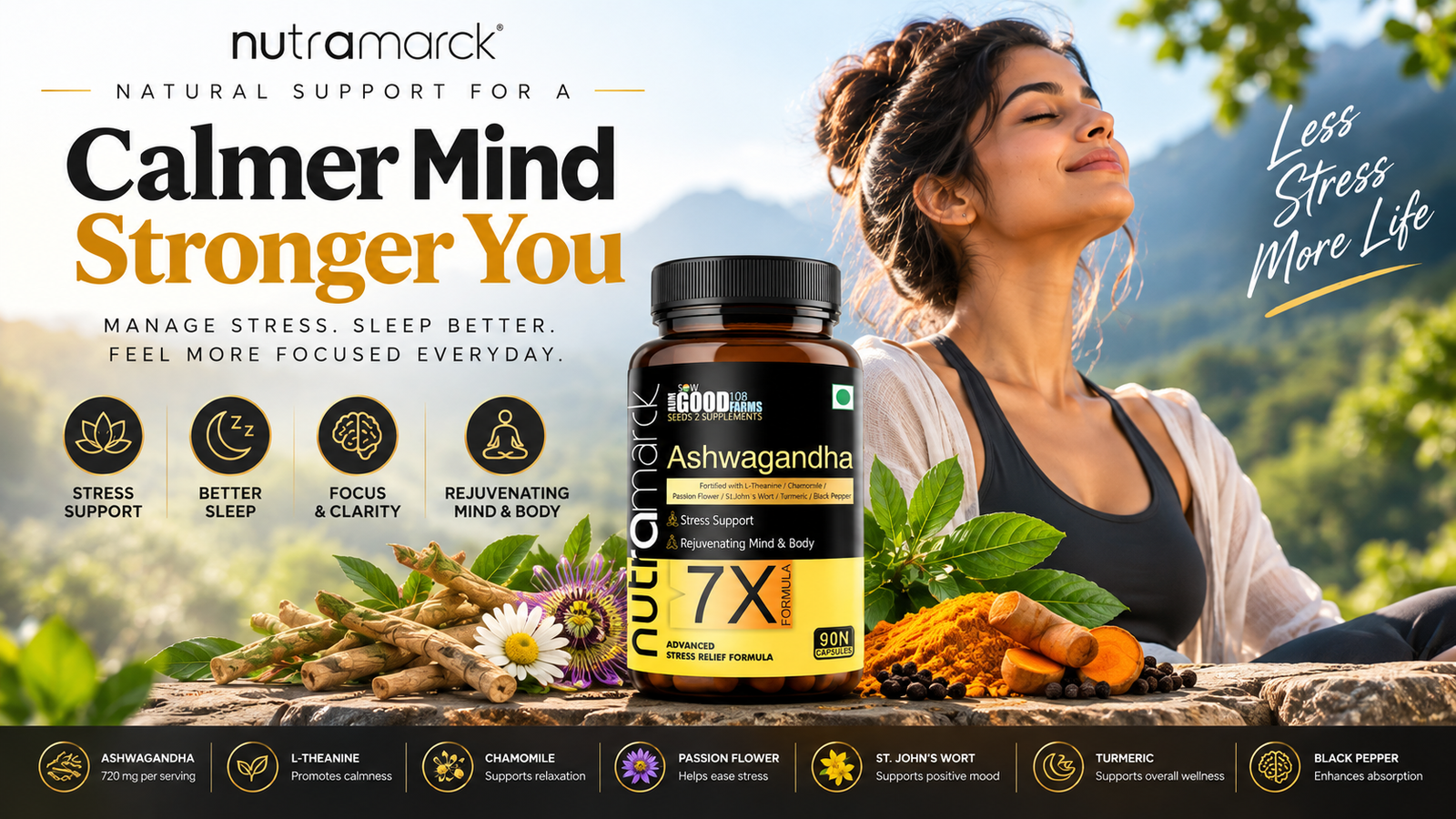
Ashwagandha Benefits: Uses, Dosage, Best Time to Take & Side Effects
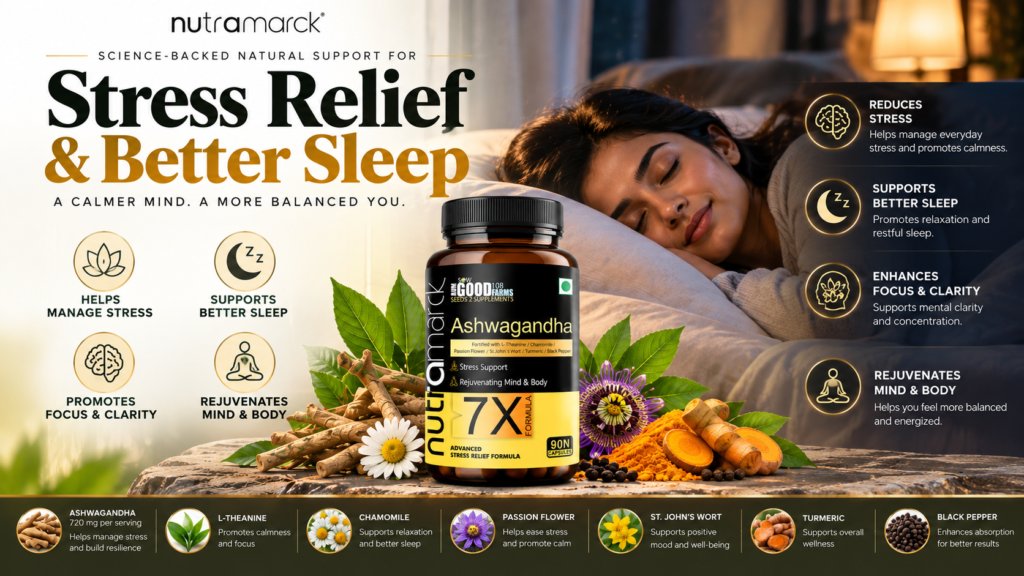
Ashwagandha has been used for centuries in traditional Indian wellness practices, but today it has become one of the most widely discussed botanical supplements for stress, relaxation, sleep and everyday resilience.
Its scientific name is Withania somnifera.
Modern clinical research has investigated ashwagandha for several potential uses, particularly stress and sleep. However, different studies have used very different extracts, concentrations and doses.
So what does ashwagandha actually do?
What are the potential ashwagandha benefits for men and women? How much has been used in clinical studies? Should you take ashwagandha in the morning or at night? And who should avoid it?
Here is a science-focused guide.
What Is Ashwagandha?
Ashwagandha (Withania somnifera) is an evergreen shrub traditionally used in Ayurvedic and Unani systems.
It is sometimes called:
- Indian ginseng
- Winter cherry
- Withania somnifera
Despite the name “Indian ginseng,” ashwagandha is not actually a member of the ginseng family.
The root has traditionally been one of the most commonly used parts of the plant.
Modern ashwagandha supplements can contain:
- Root powder
- Root extract
- Root-and-leaf extract
- Standardized extracts
This distinction matters because different preparations can contain different concentrations of naturally occurring phytochemicals.
What Are Withanolides?
Ashwagandha contains numerous naturally occurring plant compounds.
Among the most discussed are withanolides, a group of steroidal lactones.
Many standardized ashwagandha extracts specify their withanolide content.
However, a higher withanolide percentage does not automatically mean a product will produce a better result.
Clinical outcomes depend on factors including:
Extract → Standardization → Dose → Duration → Population → Intended Outcome
This is why comparing ashwagandha products solely by the largest milligram number can be misleading.
7 Potential Ashwagandha Benefits
1. Ashwagandha for Stress
Stress support is one of the most researched modern uses of ashwagandha.
Several randomized clinical trials have investigated ashwagandha extracts in adults experiencing stress.
The U.S. National Institutes of Health Office of Dietary Supplements notes that multiple studies suggest ashwagandha extracts may help reduce perceived stress, and some studies have also reported reductions in cortisol.
However, the studies used different extracts and doses, and many were relatively small.
The evidence is therefore encouraging rather than definitive.
2. Ashwagandha and Cortisol
Cortisol is a hormone involved in the body’s stress-response system.
Some clinical trials of ashwagandha have reported reductions in cortisol alongside improvements in perceived stress.
This has contributed to the popularity of ashwagandha as an “adaptogenic” botanical.
But cortisol is a normal and essential hormone.
The goal should not be to eliminate cortisol, and an ashwagandha supplement should not be described as a treatment for hormonal disorders.
3. Ashwagandha for Sleep
Ashwagandha has also been studied for sleep.
A systematic review and meta-analysis involving five trials and 372 adults found a small but statistically significant improvement in sleep compared with placebo.
Benefits appeared more pronounced among people with insomnia, at certain study doses and with longer study durations.
Research has investigated outcomes including:
- Sleep quality
- Sleep efficiency
- Total sleep time
- Time required to fall asleep
- Alertness after waking
This does not mean ashwagandha should be considered a sleeping medication.
Current evidence suggests a potential supportive role rather than a guaranteed solution for insomnia.
4. Ashwagandha for Relaxation & Calm
Ashwagandha is frequently described as an adaptogen.
“Adaptogen” is a broad term used for substances proposed to help the body adapt to physical or psychological stressors.
Some clinical trials report improvements in perceived stress and subjective well-being with certain ashwagandha extracts.
However, claims such as:
“Instantly eliminates anxiety”
or
“Works like an anti-anxiety medicine”
go beyond current evidence.
Ashwagandha supplementation and medical treatment for anxiety disorders are not interchangeable.
5. Ashwagandha Benefits for Men
Ashwagandha is frequently marketed specifically to men.
Research has investigated potential effects on:
- Stress
- Sleep
- Testosterone
- Male reproductive parameters
- Exercise performance
According to NCCIH, limited evidence suggests that taking ashwagandha for approximately 2–4 months may increase testosterone levels and sperm quality in some contexts.
However, evidence remains limited.
This does not establish ashwagandha as a treatment for infertility or low testosterone.
Men experiencing fertility or hormonal concerns should seek appropriate medical evaluation.
6. Ashwagandha Benefits for Women
Women can also be interested in ashwagandha primarily for areas such as:
- Everyday stress
- Relaxation
- Sleep quality
- General wellness
But it is important not to transform general ashwagandha research into unsupported claims about PCOS, fertility, menopause or female hormones.
Evidence for many of these specific applications remains insufficient.
Pregnancy and breastfeeding require particular caution, which we discuss below.
7. Ashwagandha and Everyday Resilience
Ashwagandha’s popularity largely comes from its traditional adaptogenic positioning and modern research into stress.
Rather than treating it as a stimulant or sedative, a more appropriate way to understand ashwagandha is as a botanical being investigated for its potential role in supporting the body’s response to everyday stress.
That distinction keeps expectations realistic.
Ashwagandha for Stress: What Does the Research Say?
This is currently one of the more promising research areas.
A systematic review identified seven studies involving a combined 491 adults with stress, anxiety or diagnosed anxiety disorders.
Studies lasted approximately 6–8 weeks and used different preparations.
Ashwagandha extract doses ranged widely—from around 240 mg to 1,250 mg per day, while another study used whole-root granules.
Overall, these studies generally reported improvements in stress or anxiety measures compared with placebo.
Some also reported lower cortisol.
However, because the studies used different extracts and doses, you should not interpret these numbers as one universal recommended dosage.
Does Ashwagandha Reduce Anxiety?
This requires more caution.
Some studies evaluating stress also report improvements in anxiety-rating scales.
However, NCCIH states that although some ashwagandha preparations may be useful for stress and insomnia, the evidence regarding anxiety remains unclear.
Therefore, ashwagandha should not replace professional treatment for an anxiety disorder.
Ashwagandha for Sleep: What Does the Research Say?
Several clinical studies have examined ashwagandha and sleep.
One trial involving adults with sleep problems investigated a standardized root-and-leaf extract for six weeks and reported improvements in several sleep measures.
Another trial studied a standardized root extract in adults with and without insomnia for eight weeks.
A systematic review combining five studies concluded that ashwagandha produced a small improvement in sleep overall.
The effect appeared more pronounced among participants with insomnia.
This is promising, but it does not establish ashwagandha as a cure for insomnia.
Persistent sleep problems deserve appropriate assessment because sleep disturbance can have many underlying causes.
Ashwagandha Dosage: How Much Should You Take?
There is no single scientifically established dose that applies to every ashwagandha product.
Why?
Because research uses different:
- Plant parts
- Extracts
- Extraction methods
- Withanolide concentrations
- Study populations
- Outcomes
For stress-related studies, standardized extracts have been investigated across a broad range of doses.
Some studies have reported stronger effects around 500–600 mg/day, while other standardized extracts have been studied at substantially lower amounts because their composition differs.
For sleep, clinical studies have also used different standardized preparations and doses.
Therefore:
Do not copy the milligram amount from one clinical trial and assume it applies to every ashwagandha supplement.
Follow the directions on the specific product you use.
Best Time to Take Ashwagandha
One of Google’s common ashwagandha questions is:
When is the best time to take ashwagandha?
There is no universal scientifically established clock time that everyone must follow.
The appropriate timing can depend on:
- Product directions
- Formulation
- Individual tolerance
- Intended wellness routine
Ashwagandha in the Morning
Some people incorporate ashwagandha into a daytime wellness routine.
Ashwagandha at Night
People primarily interested in relaxation or sleep may prefer an evening routine.
Because ashwagandha can cause drowsiness in some individuals, nighttime may suit some users better.
However:
Morning vs night is not a universal rule.
Follow the directions of your particular formulation.
Should You Take Ashwagandha With Food?
This depends on the formulation.
Some people may find botanical supplements easier to tolerate with food.
For example, NutraMarck Ashwagandha 7X currently directs users to take two capsules daily with food, or as directed by a healthcare professional.
Always follow the instructions on the actual product rather than generic advice from another supplement.
How Long Does Ashwagandha Take to Work?
Ashwagandha should not be viewed as an instant-effect supplement.
Clinical studies investigating stress and sleep generally evaluate outcomes after weeks rather than minutes or hours.
For example, many studies have lasted approximately:
6–12 weeks
Results differ between individuals, extracts and outcomes.
Therefore claims such as “feel the effects instantly” are not supported by this research.
Can You Take Ashwagandha Every Day?
Clinical studies commonly administer ashwagandha daily.
However, this does not mean indefinite use has been established as safe.
The NIH and NCCIH note that ashwagandha appears to be generally well tolerated in studies lasting up to about three months, but there is insufficient evidence to establish its long-term safety over many months or years.
Long-term daily use therefore deserves more caution than supplement marketing sometimes suggests.
Ashwagandha Side Effects
Ashwagandha can cause side effects.
Commonly reported effects include:
- Stomach upset
- Loose stools or diarrhoea
- Nausea
- Drowsiness
- Vomiting in some cases
Most reported side effects in clinical research have been relatively mild.
However, more serious concerns have also been reported.
Ashwagandha and Liver Safety
Rare cases of liver injury have been reported in association with ashwagandha-containing supplements.
This does not mean everyone taking ashwagandha will experience liver problems.
But it does mean claims such as “100% side-effect free” are inappropriate.
Stop using a supplement and seek medical attention if you develop concerning symptoms such as jaundice or other signs suggestive of liver problems.
People with existing liver disease should seek professional guidance before using herbal supplements.
Ashwagandha and Thyroid Function
Ashwagandha may affect thyroid function in some people.
It may also interact with thyroid medication.
Therefore people with thyroid disorders or those taking thyroid hormones should speak with their healthcare professional before using ashwagandha.
Can Ashwagandha Interact With Medicines?
Yes.
Potential interactions can include certain:
- Diabetes medicines
- Blood-pressure medicines
- Sedatives
- Anti-seizure medicines
- Immunosuppressants
- Thyroid medicines
This is another reason “natural” should never be interpreted as “cannot interact with medicines.”
Who Should Avoid Ashwagandha?
Professional guidance is particularly important for people with medical conditions or regular medication use.
NCCIH advises that ashwagandha should be avoided during pregnancy and should not be used while breastfeeding.
It is also not recommended for some people with:
- Autoimmune disorders
- Thyroid disorders
- Upcoming surgery
- Certain hormone-sensitive prostate cancers
If you have an existing medical condition, discuss supplementation with an appropriate healthcare professional.
Ashwagandha vs Magnesium Glycinate
Both are popular in stress-and-sleep wellness, but they are fundamentally different.
Ashwagandha
A botanical derived from Withania somnifera.
It has been investigated particularly for stress and sleep.
Magnesium Glycinate
A supplemental form of the essential mineral magnesium associated with glycine.
Magnesium has established physiological roles in normal muscle function, nervous-system function and energy metabolism.
They should not be treated as interchangeable supplements.
Ashwagandha vs Glycine
Again, these are completely different.
Ashwagandha = botanical.
Glycine = amino acid.
Glycine has been investigated in small sleep studies, whereas ashwagandha has been studied in relation to stress and sleep using various standardized extracts.
The appropriate choice depends on the individual and intended nutritional goal.
Ashwagandha vs Shilajit
Ashwagandha and shilajit are both associated with traditional Indian wellness practices, but they are not the same substance.
Ashwagandha is a botanical.
Shilajit is a naturally occurring mineral-rich substance traditionally collected from mountainous regions.
Their compositions and research bases differ considerably.
Avoid assuming that two “Ayurvedic” supplements have identical functions.
How to Choose an Ashwagandha Supplement
Don’t choose a product based solely on the biggest number printed on the front.
1. Check the Plant Part
Determine whether the supplement contains:
- Root
- Root extract
- Root and leaf
- Whole-plant material
2. Look at the Extract
Clinical research frequently uses specific standardized extracts.
The form matters.
3. Check Withanolide Information
If standardized, determine whether the label explains the withanolide concentration.
4. Check the Complete Formula
If it is a multi-ingredient product, examine the other active ingredients rather than attributing everything to ashwagandha.
5. Follow the Actual Serving
Check whether the listed amount applies to:
- One capsule
- Two capsules
- A complete daily serving
6. Avoid Miracle Claims
Be cautious with products claiming to:
“Cure anxiety”
“Instantly eliminate stress”
“Cure insomnia”
“Double testosterone”
“Treat infertility”
“Fix thyroid problems”
These claims exceed current evidence.
Explore NutraMarck Ashwagandha 7X
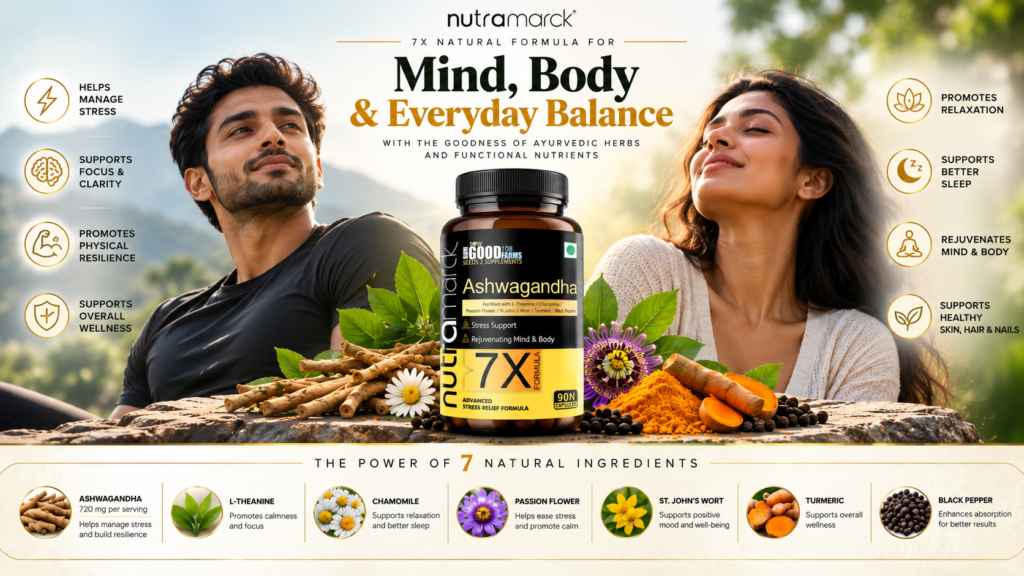
NutraMarck Ashwagandha 7X is a multi-ingredient wellness formulation built around 720 mg Ashwagandha per serving.
The current formulation also includes:
- L-Theanine
- Chamomile
- Passion Flower
- St. John’s Wort
- Turmeric
- Black Pepper
It is designed around calm, everyday stress support, focus and a restful wellness routine.
Important: Evidence for ashwagandha itself should not automatically be attributed to the complete 7X formulation.
Explore NutraMarck Ashwagandha 7X Capsules →
Review the complete product label, serving information and warnings before use.
Frequently Asked Questions About Ashwagandha
What are the main benefits of ashwagandha?
Modern research has focused particularly on stress and sleep. Several small clinical trials suggest certain ashwagandha extracts may help with perceived stress, while a smaller body of evidence suggests modest sleep benefits.
Does ashwagandha help with stress?
Several randomized studies have reported improvements in perceived stress with certain ashwagandha extracts. However, preparations and doses differ substantially between studies.
Does ashwagandha help you sleep?
Some clinical studies and a systematic review suggest ashwagandha extract may modestly improve certain sleep outcomes, with effects appearing more pronounced in people with insomnia.
What is the best time to take ashwagandha?
There is no universal best time. Morning or evening can depend on the formulation, intended routine and individual response. Follow the product directions.
How much ashwagandha should I take?
There is no single dosage applicable to all ashwagandha products because extracts and standardizations differ. Follow the serving instructions for the specific formulation.
How long does ashwagandha take to work?
Clinical trials generally evaluate effects over several weeks. Ashwagandha should not be expected to produce guaranteed immediate results.
What are ashwagandha benefits for men?
Research has investigated stress, sleep, reproductive parameters and testosterone. Evidence for testosterone and sperm quality is limited and does not establish ashwagandha as a treatment for infertility or low testosterone.
What are ashwagandha benefits for women?
Research relevant to both men and women includes stress and sleep. Evidence is insufficient to make broad treatment claims for female hormonal or reproductive conditions.
Can I take ashwagandha every day?
Many clinical trials administer it daily for several weeks. However, long-term safety beyond approximately three months is not well established.
Can ashwagandha cause side effects?
Yes. Possible effects include stomach upset, loose stools, nausea and drowsiness. Rare liver-injury cases have also been reported.
Is ashwagandha safe during pregnancy?
NCCIH advises avoiding ashwagandha during pregnancy and not using it while breastfeeding.
Can ashwagandha affect thyroid function?
It may affect thyroid function and potentially interact with thyroid medication, so people with thyroid conditions should seek professional advice.
Final Thoughts
Ashwagandha is not simply another wellness trend.
It is a traditional botanical that has now been investigated in multiple modern clinical trials.
Among its many advertised uses, the research is currently most relevant to stress and sleep.
But three details matter:
The Extract Matters.
The Dose Matters.
The Evidence Matters.
Different clinical trials have used different plant parts, extracts, withanolide concentrations and doses. This means results from one specific preparation should not automatically be applied to every ashwagandha product.
And while short-term research is encouraging, long-term safety remains less certain.
The better approach is:
Choose Transparently → Follow the Label → Keep Expectations Realistic → Consider Medication & Health Conditions
Interested in reviewing the NutraMarck formulation?
View NutraMarck Ashwagandha 7X Capsules →
References
- U.S. National Institutes of Health, Office of Dietary Supplements. Ashwagandha: Is it helpful for stress, anxiety, or sleep? Health Professional Fact Sheet.
- National Center for Complementary and Integrative Health. Ashwagandha: Usefulness and Safety.
- Lopresti AL, et al. Clinical research evaluating ashwagandha supplementation and stress-related outcomes.
- Langade D, et al. Clinical research investigating ashwagandha root extract and sleep.
- Cheah KL, et al. Systematic review and meta-analysis examining ashwagandha and sleep.
Medical Disclaimer
This article is for general educational and informational purposes only. It is not intended to diagnose, treat, cure or prevent any disease. Dietary supplements should not replace prescribed medication, a balanced diet or professional medical care. Ashwagandha may interact with medications and may not be appropriate for certain individuals. Consult an appropriate healthcare professional if you have a medical condition, take medication, are pregnant or breastfeeding.






Add comment