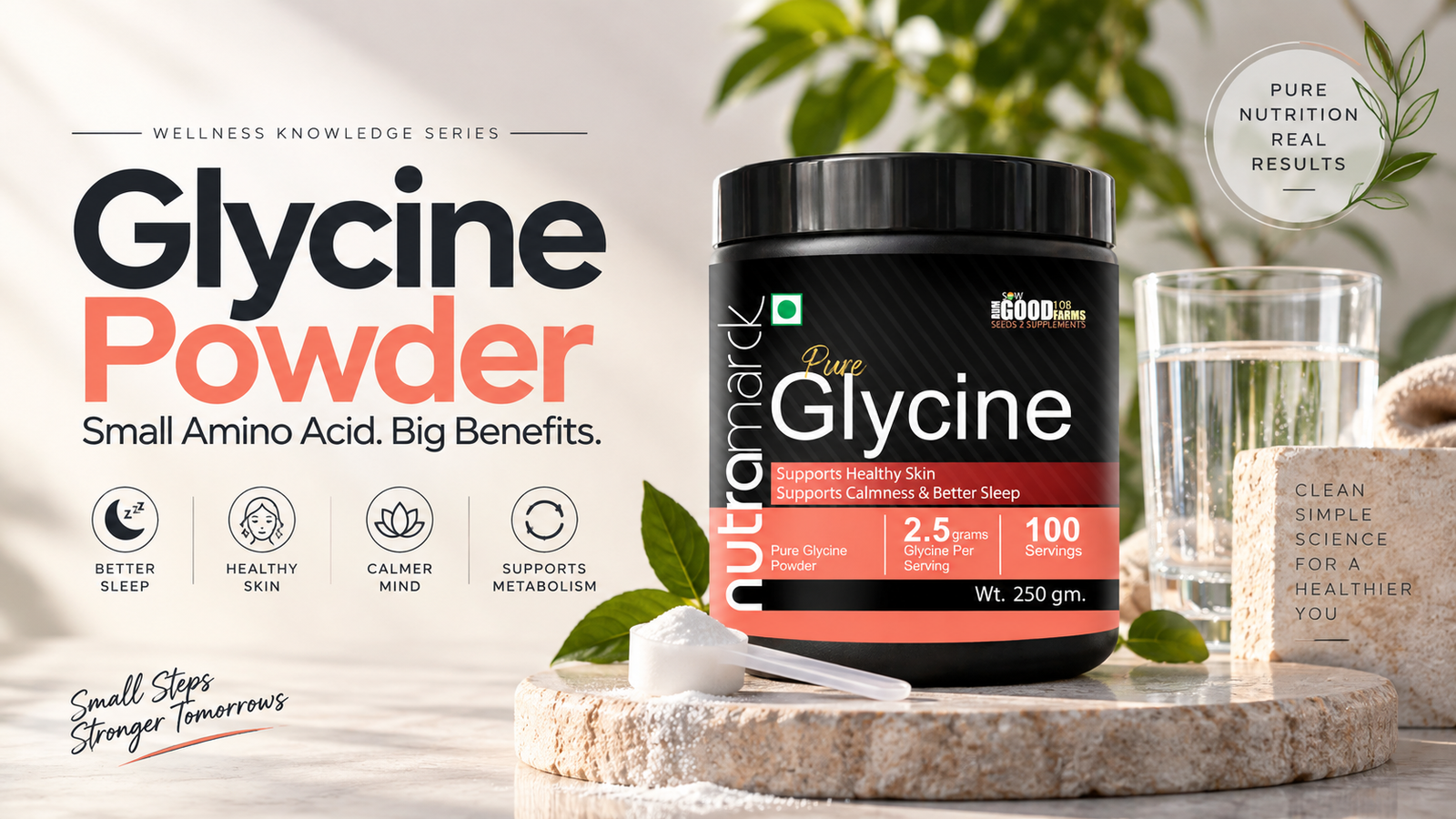
Glycine Powder Benefits, Dosage, Sleep & Uses: Complete Guide
Glycine may be one of the simplest amino acids, but its role in the human body is surprisingly broad.
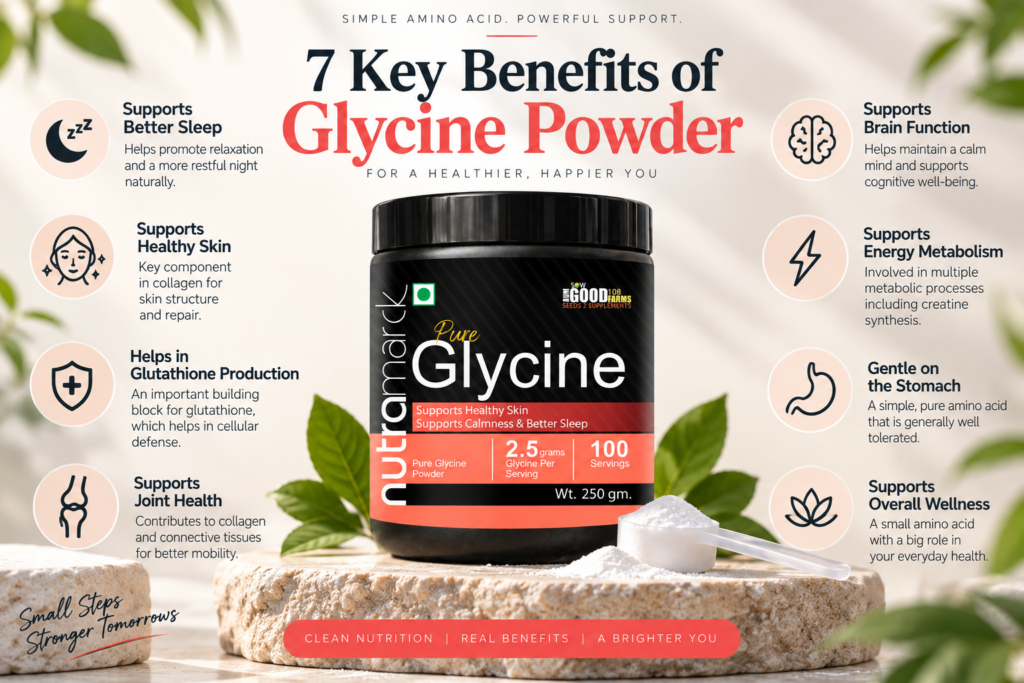
It is involved in the production of collagen, glutathione, creatine, heme and other important compounds. Glycine has also attracted increasing interest for its potential role in sleep and nighttime wellness.
So what exactly is glycine? What are the potential benefits of glycine powder? How much has been studied for sleep? And when should you take it?
Here is a science-focused guide.
What Is Glycine?
Glycine is an amino acid naturally produced by the human body and also obtained through food.
It is often described as a non-essential amino acid, meaning the body can synthesize it rather than relying entirely on dietary intake.
However, glycine is involved in numerous physiological processes and acts as a building block or precursor for several important molecules.
These include:
- Collagen
- Glutathione
- Creatine
- Heme
- Purines
Glycine also has functions within the nervous system.
What Is Glycine Powder?
Glycine powder is a supplemental form of the amino acid glycine.
Unlike capsules or tablets, powder allows glycine to be mixed into water or another suitable beverage according to the product’s directions.
Pure glycine naturally has a mildly sweet taste, which can make powder a convenient format for some users.
7 Potential Glycine Benefits
1. Glycine May Support Sleep Quality
Sleep is one of the most researched consumer uses of supplemental glycine.
Small human studies have investigated approximately 2.5 grams of glycine before bedtime.
Some reported improvements in subjective sleep quality, sleep efficiency, sleep onset and next-day fatigue or alertness.
However, these studies involved relatively small numbers of participants, and systematic reviews have highlighted limitations and risk of bias.
Therefore, glycine should not be considered a treatment for insomnia.
2. Glycine Is an Important Component of Collagen
Glycine has an important structural role in collagen.
Collagen is a major structural protein found throughout connective tissues.
This is one reason glycine receives attention in discussions surrounding skin, joints and connective-tissue nutrition.
However, taking glycine powder alone should not be interpreted as guaranteeing improvements in skin or joint health.
3. Glycine Helps the Body Produce Glutathione
This connection is particularly interesting for NutraMarck customers.
Glutathione is produced from three amino acids:
Glycine + Cysteine + Glutamate
Therefore, glycine participates in the body’s endogenous glutathione synthesis.
Glutathione is an important intracellular antioxidant involved in cellular redox balance.
This does not mean taking glycine automatically produces a particular increase in glutathione in every individual.
4. Glycine Participates in Creatine Synthesis
Glycine is also one of the amino acids involved in the body’s production of creatine.
Creatine itself plays an important role in cellular energy metabolism, particularly in tissues with high and fluctuating energy requirements.
Again, glycine and creatine supplements are not interchangeable.
5. Glycine Functions in the Nervous System
Glycine has neurotransmitter activity within the nervous system and interacts with several neurological pathways.
This biological role is one proposed reason researchers have investigated glycine in relation to sleep.
However, the mechanisms observed experimentally should not be converted into claims that glycine treats neurological or psychiatric disorders.
6. Glycine and Exercise Recovery
Because glycine participates in collagen synthesis, protein metabolism and other biological processes, researchers have explored its potential relevance to physical performance and recovery.
But evidence here needs perspective.
A recent review concluded that there is not yet sufficient rigorous human evidence to establish glycine as an effective sports or ergogenic supplement. Much of the encouraging evidence comes from animal models, cells and tissues rather than high-quality athlete trials.
So glycine should not be marketed as a guaranteed muscle-building or recovery supplement.
7. Glycine Supports Several Essential Metabolic Processes
Glycine’s biological importance extends well beyond one particular benefit.
It contributes to the synthesis of multiple compounds required by the body and participates in metabolic and cellular processes.
This makes glycine interesting from a nutritional perspective even without exaggerated “miracle amino acid” claims.
Glycine for Sleep: What Does the Research Say?
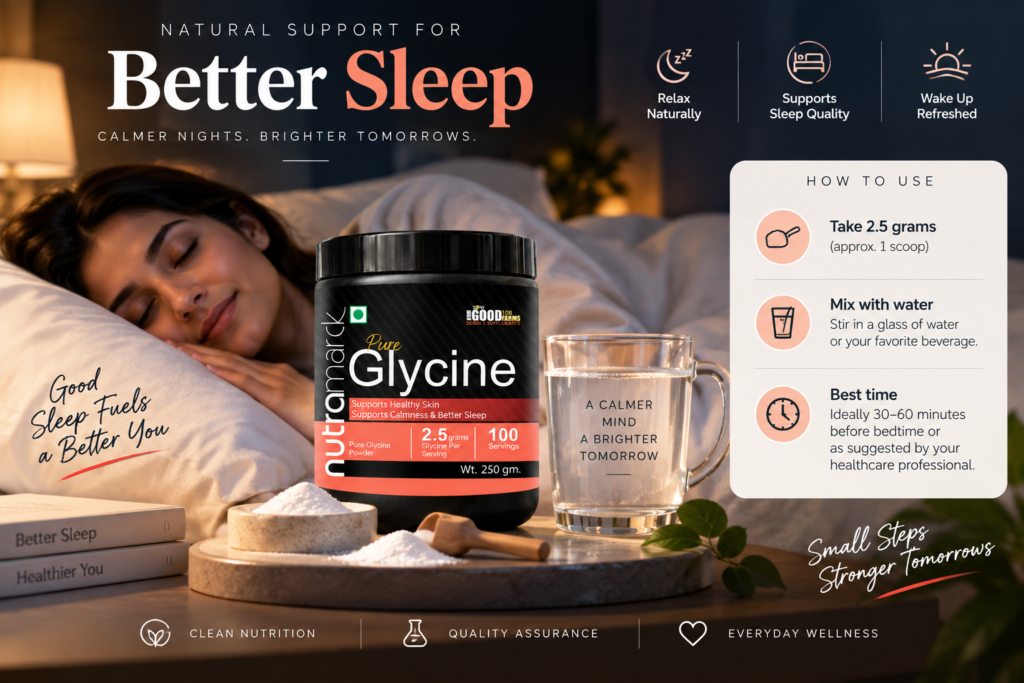
This is probably the most important section for people considering glycine powder.
Several small studies have investigated 3 g of glycine taken approximately 30–60 minutes before bedtime.
Reported outcomes have included improvements in subjective sleep quality and reductions in next-day fatigue or sleepiness.
One sleep-restriction study also found reduced fatigue and improved psychomotor vigilance after participants consumed 3 g before bedtime.
But there is an important limitation.
A systematic review found that sleep-related studies in healthy populations generally involved small sample sizes and substantial risk of bias.
Therefore:
Promising evidence ≠ definitive proof.
More robust human trials are needed.
How Might Glycine Affect Sleep?
Researchers have proposed several possible mechanisms.
Experimental work suggests glycine may influence thermoregulation by increasing peripheral blood flow and promoting heat loss, contributing to the normal decline in core body temperature associated with sleep.
Some mechanistic evidence comes from animal research, so it should not be treated as definitive proof of the same effect in humans.
Does Glycine Make You Drowsy?
Glycine isn’t generally considered a conventional sedative.
The sleep research is more about potentially supporting sleep physiology and perceived sleep quality than causing immediate sedation.
That distinction matters.
Glycine Dosage: What Has Research Studied?
There is no single universal supplemental glycine dose appropriate for every purpose and every person.
For sleep research, one of the most commonly investigated amounts has been:
3 grams before bedtime
Studies have often administered this approximately 30–60 minutes before sleep.
This is a description of research protocols—not an individualized dosage recommendation.
Always follow the directions on your specific supplement.
What Is the Best Time to Take Glycine?
The answer depends on why it is being used.
For sleep-focused research, glycine has generally been consumed shortly before bedtime.
For general nutritional supplementation, there is no established universal “best” time that applies to everyone.
Consistency and following product directions matter more than chasing a perfect clock time.
Can You Take Glycine Every Day?
Glycine is naturally present in the human body and diet.
Supplement studies have used a wide range of amounts and durations, but long-term evidence for routine supplementation in healthy people is less extensive than many supplement advertisements imply. A systematic review noted that studies in healthy populations were generally short and called for larger, longer-term trials.
People considering regular supplementation should follow product instructions and seek professional advice where appropriate.
What Foods Naturally Contain Glycine?
Glycine occurs naturally in protein-containing foods.
Sources can include:
- Meat
- Fish
- Poultry
- Gelatin
- Collagen-rich foods
- Dairy products
- Legumes and other protein-containing foods
A balanced diet remains the foundation of amino-acid intake.
Glycine Powder vs Capsules
Neither format is automatically better.
Glycine Powder
Powder can be convenient when gram-level amounts are desired and can easily be mixed with water.
Glycine Capsules
Capsules can be convenient for portability and pre-measured servings.
However, reaching gram-level servings may require multiple capsules depending on the formulation.
The best format depends on the product, serving size and individual preference.
Glycine vs Magnesium Glycinate
This is an important distinction.
Glycine is an amino acid.
Magnesium glycinate/bisglycinate is a magnesium compound in which magnesium is associated with glycine.
They are not the same supplement.
Someone searching for magnesium supplementation should not assume that pure glycine powder provides an equivalent amount of magnesium—it does not.
You can also read our complete guide to Magnesium Glycinate Benefits, Dosage & Best Time to Take on the NutraMarck blog.
Glycine vs Collagen
Glycine is an individual amino acid and an important component of collagen.
Collagen supplements, however, contain peptides/amino acids derived from collagen proteins and are not equivalent to pure glycine powder.
The two products therefore should not be considered interchangeable.
Glycine and Glutathione: What’s the Connection?
Glycine is particularly relevant to glutathione because it is one of the amino acids used to synthesize glutathione inside the body.
Glutathione consists of:
Glutamate + Cysteine + Glycine
This biochemical relationship does not mean glycine supplementation is equivalent to taking a glutathione supplement.
For a detailed explanation of glutathione, read our Glutathione Benefits, Forms, Dosage & Uses guide.
Possible Side Effects of Glycine
Glycine has generally been tolerated in the small human studies conducted at commonly researched amounts.
However, supplements can affect individuals differently.
Higher intakes may cause gastrointestinal discomfort in some people, and evidence regarding very high-dose or prolonged supplementation is more limited.
A recent review also emphasized the need for better human safety and efficacy studies for sports supplementation rather than assuming that high doses are harmless.
Who Should Speak to a Healthcare Professional First?
Professional advice is sensible if you:
- Have an existing medical condition
- Take prescription medication
- Are pregnant or breastfeeding
- Have kidney or liver concerns
- Plan to take unusually high amounts
- Are considering glycine for a diagnosed sleep disorder
Supplements should not replace appropriate medical assessment.
How to Choose a Glycine Powder
A premium supplement does not need a complicated formula.
For a straightforward glycine powder, look for:
Clear Ingredient Disclosure — You should know exactly what the powder contains.
Transparent Serving Information — The amount per serving should be easy to understand.
Quality Manufacturing — Look for appropriate manufacturing and quality information.
Simple Directions — Usage instructions should be clearly stated.
No Miracle Claims — Avoid products promising to cure insomnia, anxiety, metabolic disease or other medical conditions.
Explore NutraMarck Glycine Powder
NutraMarck Glycine Powder provides a convenient powder format for people looking to incorporate glycine into their wellness routine.
View NutraMarck Glycine Powder 250g
Check the product page for the complete ingredient declaration, serving information and directions before use.
Frequently Asked Questions
What is glycine powder used for?
Glycine is an amino acid involved in several biological processes, including collagen, glutathione and creatine synthesis. Supplemental glycine has also been researched for sleep.
Does glycine help with sleep?
Small human studies using approximately 3 g before bedtime have reported improvements in some sleep-related outcomes, but the evidence base remains limited and larger studies are needed.
How much glycine has been studied for sleep?
Approximately 3 g taken 30–60 minutes before bedtime has commonly been used in small sleep studies. This describes research protocols and is not an individualized dosage recommendation.
Is glycine the same as magnesium glycinate?
No. Glycine is an amino acid. Magnesium glycinate is a magnesium compound containing magnesium associated with glycine.
Is glycine the same as collagen?
No. Glycine is one amino acid found abundantly in collagen. Collagen is a much larger protein structure.
Is glycine involved in glutathione production?
Yes. Glycine is one of the three amino acids that make up glutathione.
Can glycine powder be taken every day?
Glycine occurs naturally in the body and diet, but the appropriate use of supplemental glycine depends on the individual, product and purpose. Long-term evidence in healthy populations is less extensive than short-term evidence.
What is the best time to take glycine?
For sleep-related research, glycine has typically been taken shortly before bedtime. There is no universal best time for all uses.
Final Thoughts
Glycine is much more than another trendy supplement ingredient.
It is a simple amino acid involved in collagen formation, glutathione synthesis, creatine production and nervous-system function.
Its potential relationship with sleep is particularly interesting, with several small human studies reporting positive outcomes after approximately 3 g before bedtime. But current research remains limited enough that claims should stay realistic.
The better way to think about glycine is:
Essential biology. Simple formulation. Emerging research. No miracle promises.
References
- Razak MA et al. Multifarious Beneficial Effect of Nonessential Amino Acid, Glycine: A Review.
- The effect of glycine administration on the characteristics of physiological systems in human adults: A systematic review.
- Bannai M et al. The effects of glycine on subjective daytime performance in partially sleep-restricted healthy volunteers.
- The Sleep-Promoting and Hypothermic Effects of Glycine are Mediated by NMDA Receptors in the Suprachiasmatic Nucleus.
- An Update of the Promise of Glycine Supplementation for Enhancing Physical Performance and Recovery.




Add comment